I’m super excited to share with you one of my all-time favorite decks: Machine Head. This deck has been my go-to for quite some time now, and let me tell you, it’s been turning heads on the battlefield.
After having some success with this deck, I’ve noticed that it’s been catching the attention of fellow players. I’ve received a ton of questions about its strategy, card choices, and overall game plan. So, I figured it’s high time we dive into the inner workings of Machine Head. Get ready to join me as we break down this powerhouse of a deck, explore its synergies, and discover why it’s been causing such a stir among players. Whether you’re looking to shake up your playstyle or just curious about what makes this deck so much fun, you’re in for a treat. Let’s get started!

The Premise
The basic idea behind Machine Head is to ramp up your mana quickly, dropping heavy-hitting creatures onto the battlefield as early as turn one! We’re talking about some serious firepower here. Once those big beaters hit the board, it’s all about going ape on your opponent, unleashing relentless attacks and overwhelming them with brute force. And just when they think they’ve caught a break with a decent blocker, we’ve got a little surprise up our sleeve: Berserk! This card takes those already massive creatures and pumps them up to even greater heights, delivering devastating trampling blows that will quickly end the game. To maximise it’s potential Machine Head is fully powered and ready to kick some serious ass.
The Basics
So, I have mentioned ramp, heavy-hitters and Berserk as the premise of Machine Head. Let’s go over the card sellection within these categories

At the heart of Machine Head lies a playset of a creature that epitomizes its raw power and aggression: Juzam Djinn. This iconic card is the undisputed poster child of the deck, embodying everything it stands for. With its formidable 5/5 body and the ability to hit the battlefield as early as turn one with the right ramp, Juzam Djinn is an absolute powerhouse. Its drawback of losing life each turn is a small price to pay for the sheer brute force it brings to the table.
Second card in and we are already talking controversial card choices: The infamous Dark Ritual. Now, some may argue that it’s not exactly ramp, but rather acceleration. What do I mean by that? Well, Dark Ritual isn’t about slowly building up your mana resources like traditional ramp spells. Instead, it’s all about that sudden burst of mana, giving you a significant boost right out of the gate. With beaters like the Juzam that’s exactly what we are looking for.

Nothing beats a turn one Juzam, so I am running playset of Rituals. Here’s the thing about Dark Ritual thought: It has the potential to be the best mana acceleration in your deck, allowing you to power out big threats earlier than your opponent ever expected. But, and it’s a big but, it can also be the biggest bust as a dead card draw, especially in the late game when you need impactful draws.
In the past I have ran Machine Head both with and without Dark Ritual. There is something to be said for both versions and it will effect you over-all build. The key to mastering Dark Ritual lies in understanding its potential and mitigating its downside. To truly nullify its downside, you need to ensure you have sufficient card draw in your deck, including the “draw 7”-spells. By maintaining a healthy balance between acceleration and card advantage, you can turn Dark Ritual from a gamble into a game-winning play.

Sengir Vampire is a perfect fit for this deck, especially considering the deck’s reliance on Dark Rituals. As a flying creature, Sengir Vampire also complements Juzam Djinn’s ground-based presence, providing an additional threat that demands immediate answers from opponents. At a cost of five mana it aligns well with the acceleration from the Rituals and can become a quick follow-up threat to the powerful Juzam Djinn. So yeah, we will be running four.

Machine Head is a very greedy deck. Embracing all five colors and boasting nearly all the best restricted cards, it’s a high-risk, high-reward strategy. But with such ambition comes a considerable challenge: the mana base. Balancing all five colors while avoiding mana screw is no easy feat, especially when many of the key cards either feature demanding double-colored mana symbols or are essential one drops. With such a diverse range of colors and double-colored mana symbols among our key cards, ensuring consistent mana production becomes paramount.
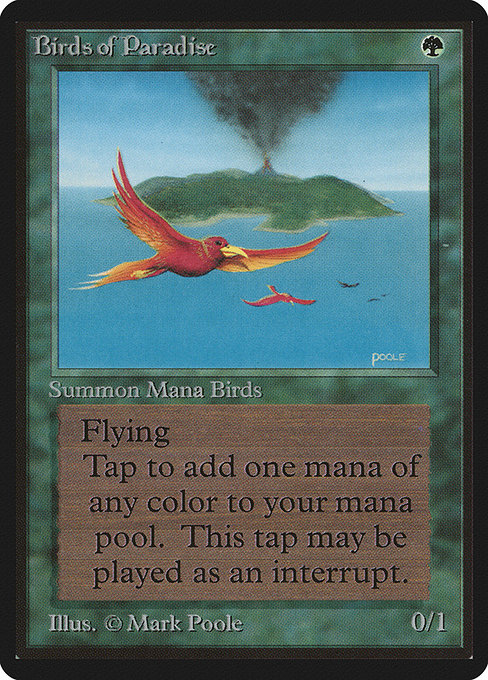
Missing our drops due to mana issues can spell disaster for our game plan.To mitigate this risk and ensure consistency, I’m running all five Moxes and Black Lotus to give us that explosive mana boost right from the start. But that’s not all. I am also leaning heavily on a playset of Birds of Paradise to provide that essential mana fixing and acceleration. These little feathered friends not only help hit colors consistently but also ramp us into our bigger threats.
Sol Ring is the definition of a staple card! It’s ability to accelerate mana production is so potent that it’s often considered one of the most powerful cards in the game. Its impact on the early game can be immense, setting the tone for the rest of the match and potentially snowballing into a significant advantage. Same goes for Black Lotus.


The combination of efficiency, acceleration, versatility, power level, and historical significance make these cards an auto-include in virtually every deck, regardless of strategy.
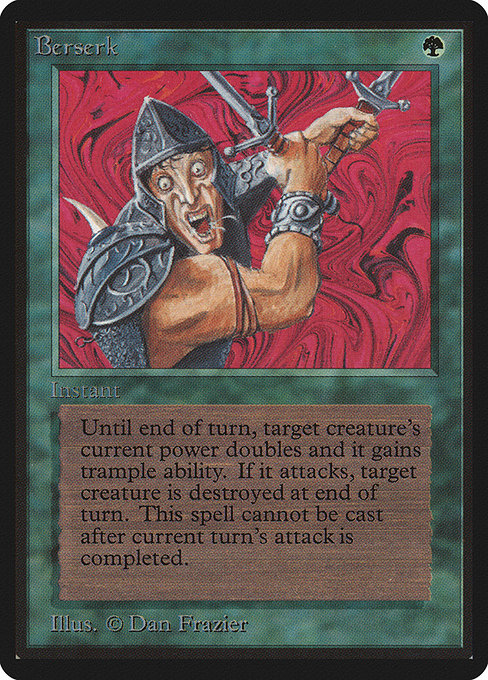
Berserk shines in a Machine Head deck due to its ability to significantly amplify the deck’s already aggressive strategy. It’s concidered to be a “win-more”-kind of a card. Berserk offers a burst of damage that can quickly end the game. Nothing feels more rewarding then a turn one Juzam followed up by a Berserk, Berserk in turn two. Additionally, Berserk’s versatility adds another layer of strategic depth to the deck.
While primarily used for offense, it can also serve as a defensive tool when needed. Berserk’s low mana cost makes it incredibly efficient to cast, allowing you to deploy threats or disrupt opponents’ plans while still having mana available for Berserk. This flexibility in timing ensures that you can capitalize on opportunities as they arise, maximizing the card’s impact on the game. I’m running three copies of Berserk. Why not four? I simply don’t have room for it. It’s a very thight build.
The rest of the deck
As explained, the allure of Dark Ritual is undeniable in this deck. Its ability to thrust the deck forward with an explosive burst of mana is unmatched, laying the foundation for most aggressive plays. Yet, lurking beneath its enticing promise lies a real danger – Yes, Dark Ritual can grant us unmatched acceleration, but without the means to replenish our dwindling hand, it runs the risk of becoming a dead draw. That’s where our arsenal of card draw spells comes into play.
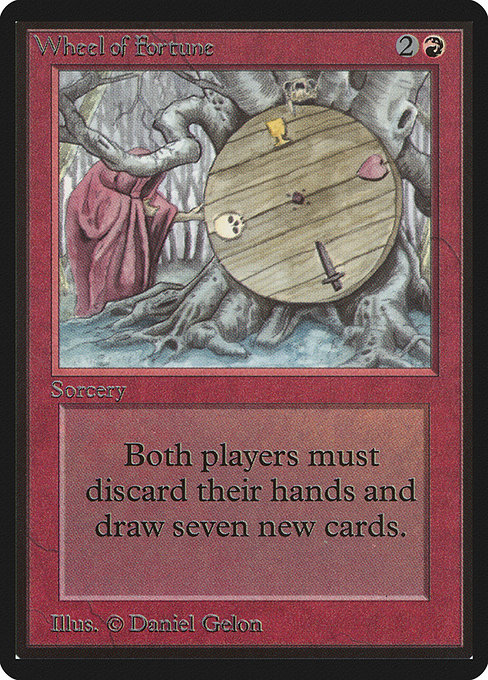


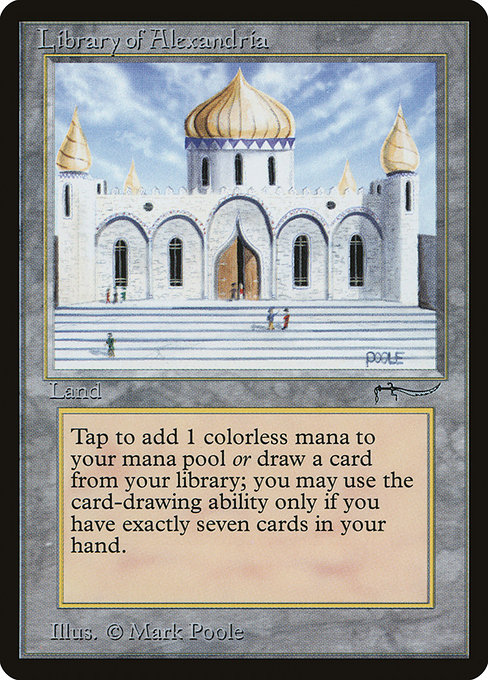
Wheel of Fortune and Timetwister offer us the chance to refill our hand, exchanging our spent resources for a fresh start. Braingeyser, on the other hand, allows us to channel our excess mana into a torrent of cards, empowering us to seize control of the battlefield with newfound knowledge. Sylvan Library offers not only card draw but also card selection. And let’s not forget Ancestral Recall, the venerable titan of card draw, granting us unparalleled access to our deck’s most potent resources with a mere whisper of its name. With so many card draw spells Library of Alexandria can also be added, despite the fast and explosive nature of this deck.


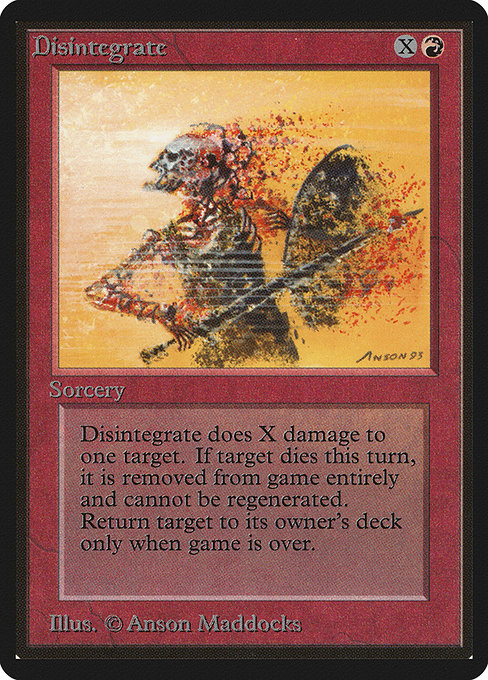
A spell that also can utilize the potential surplus mana from Dark Ritual is Disintegrate, a potent tool of destruction as creature removal or as a finisher. While Fireball may hold the title of the more iconic card, Disintegrate’s unique advantages make it the superior choice in my opinion.
One of Disintegrate’s key strengths lies in its ability to bypass the pesky defenses of regeneration. In a format where threats like Sedge Troll lurk, having a removal spell that can permanently deal with creatures without the risk of regeneration is invaluable. Moreover, the ability to directly remove creatures with Disintegrate synergizes perfectly with Timetwister. With the ability to reset the game and disrupt our opponent’s plans, Timetwister provides the perfect opportunity to capitalize on Disintegrate’s removal potential. I’m running one copy.
Speaking of removal spells Chaos Orb is another Old School auto-include.
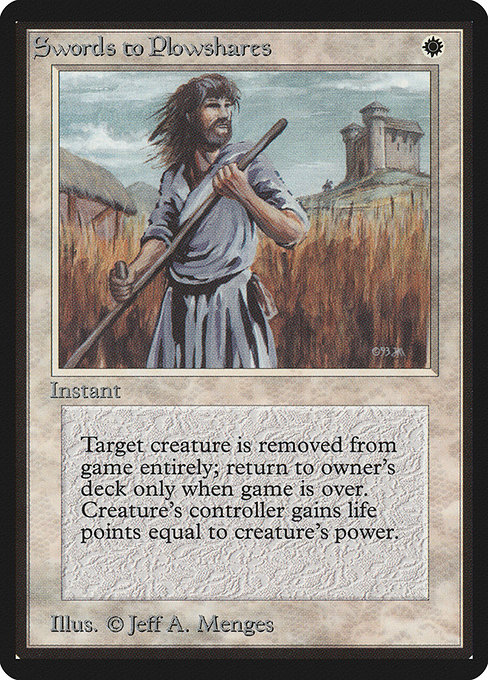
With three copies nestled within the deck, Swords to Plowshares serves as a primary answer to early threats and troublesome blockers. For a single white mana, Swords to Plowshares offers an elegant solution to any creature that dares to stand in our path.

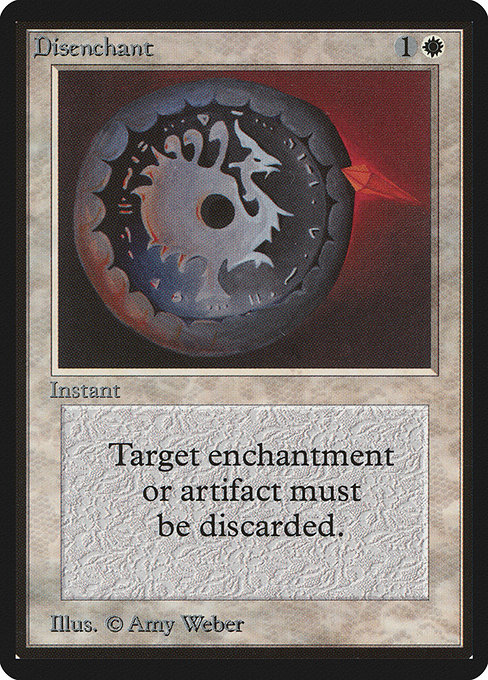
I am also running two copies of Disenchant to deal with troublesome enchantments and artifacts that could potentially derail our plans. Whether it’s the imposing presence of a Blood Moon threatening to disrupt our mana base, the oppressive grip of The Abyss or a Control Magic usurping powerful creatures, Disenchant offers a reliable solution to neutralize these threats and maintain tempo on the battlefield.

Staying with white removal; Balance stands as the ultimate equalizer, capable of turning the tide of a game with a single stroke. Its ability to level the playing field by forcing both players to sacrifice lands, creatures, and cards in hand ensures that no advantage remains unchallenged. Whether it’s breaking through a stalemate by wiping the board clean of threats or seizing control of the game’s tempo by disrupting our opponent’s resources, Balance offers versatility and power.
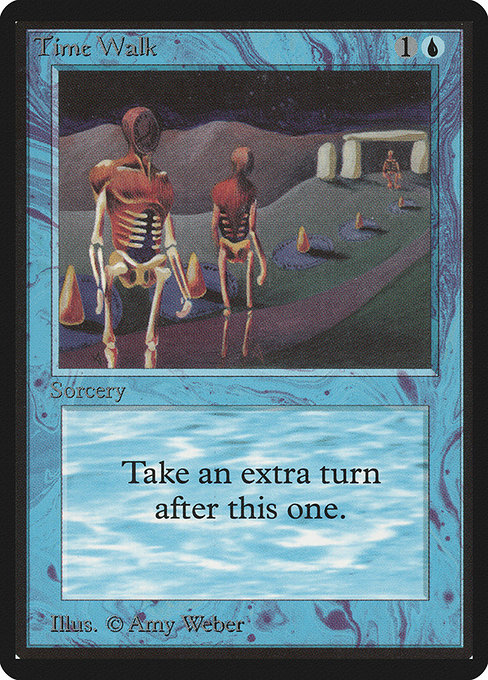
Speaking of power, one card of the Power 9 is still missing from our list! Time Walk, an absolute no brainer for this deck. For just two mana, we gain the ability to take an extra turn, opening the door to a world of possibilities. Whether it’s deploying additional threats, a double attack, or simply drawing into the perfect answer, Time Walk provides us with the time and space to push our advantage to its fullest potential.
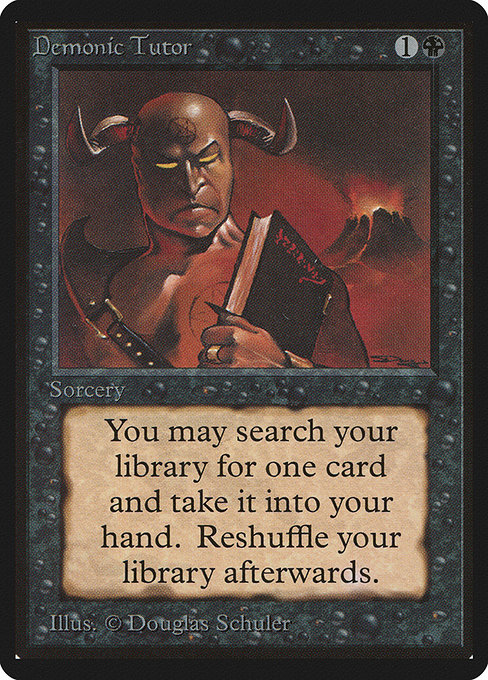
As you probably noticed by now, this deck is running a lot of powerfull restricted cards. Most are cards are concidered best in class. Demonic Tuto grants the ability to search your library for the perfect answer or threat at any given moment. But most of the time it will be Ancestral Recall though 🙂
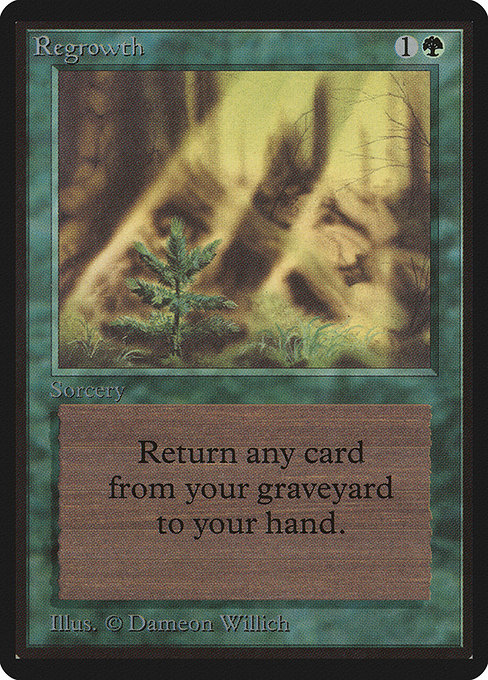
Regrowth acts as a second chance, effectively providing an additional copy of the most impactful restricted cards in our graveyard. Its ability to resurrect critical spells like Ancestral Recall, Time Walk, or any other restricted gem ensures that we can maintain unrelenting pressure on our opponents, even after they believe they’ve weathered the storm.
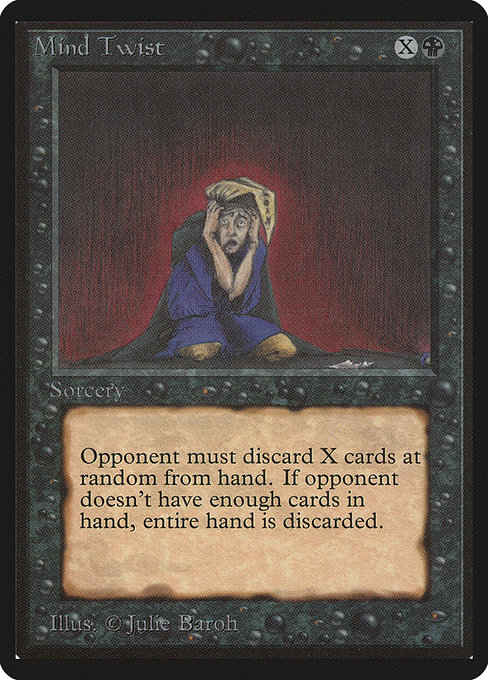
Now, I promised that Machine Head is an incredible fun deck to play. I didn’t say it is fun to play against, although most opponents will enjoy the sheer amount of nostalgic gems that we are running. This deck really looks and feels like the ultimate Old School experience. But let’s be honest, we can’t ignore the power of Mind Twist. It’s so powerful, I don’t think I have ever lost a game after I “Twisted” my opponent out of the game. It’s also a great card to dump Ritual mana into.
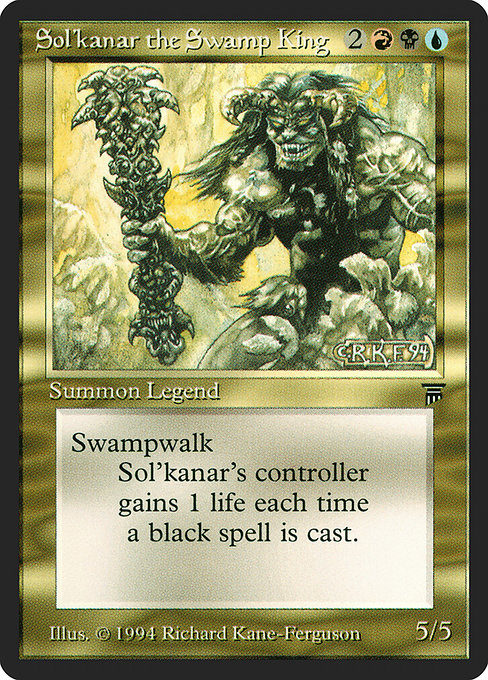
Let’s finish the build in style! While some may view it as a mere flavor choice, to me Sol’Kanar stands as the pure embodiment of the sheer excitement and thrill of the game. Its inclusion is not just a nod to my love of big creatures, but a declaration of unwavering commitment to dominating the battlefield in style. For when Sol’Kanar hits the table, there’s no denying that victory is within reach, and the glory of triumph awaits!
The hard part
Crafting the land base for a Machine Head deck is a pivotal task, essential for bolstering its ambitious strategy, it is perhaps also the hardest part. Embracing the deck’s inherent greediness, with all five colors in play and the most potent creatures sporting demanding double-colored mana symbols, demands careful consideration of every land choice. This necessitates difficult decisions regarding which lands to include and which to forego, as each slot must optimize color availability and mana consistency. Strip Mine is an absolute necessity as Maze of Ith is a real downer.
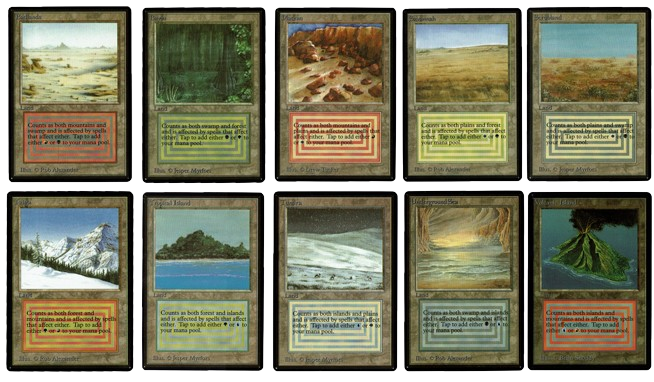
The deck is running the following lands:
- 1x Badlands
- 4x Bayou
- 4x City of Brass (yes, it hurts but there is no going around it)
- 1x Savannah
- 1x Scrubland
- 1x Taiga
- 1x Tropical Island
- 1x Underground Sea
While Mishra’s Factory undoubtedly boasts versatility and resilience as a creature land, the constraints of Machine Head leave little room for luxuries. Every card slot must be optimized to ensure maximum efficiency and effectiveness, and unfortunately, Mishra’s Factory doesn’t make the cut.
This omission represents perhaps the biggest weakness of our deck – a lack of additional threats and defensive options in the form of creature lands. Without Mishra’s Factory to provide additional pressure on the battlefield or serve as a resilient blocker in times of need, this deck solely relies on non-land threats to carry us to victory.
The Sideboard
Now, let’s delve into the sideboard of the Machine Head deck, where we’ll find a collection of cards meticulously chosen to bolster our strategies and adapt to various matchups.
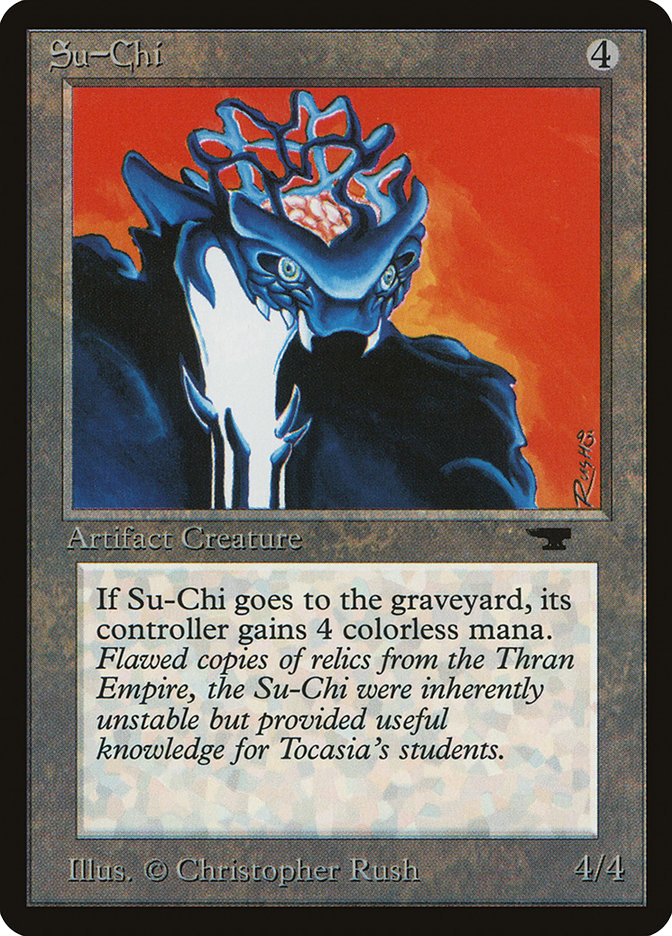
A playset of Su-Chi in the sideboard goes a long way. Not only does it apply relentless pressure, but by strategically swapping out Juzams for Su-Chi, we simultaneously somewhat neutralize the threat of City in a Bottle (Cities remain vulnerable) The Abyss and Blood Moon while maintaining offensive. It’s a versatile tactic that hits two birds with one stone.
Two copies of Blue Elemental Blast, primarily aimed at addressing Blood Moon. This versatile spell not only offers a direct answer to these problematic enchantments but also provides a means to counter red spells, a common occurrence in aggro matchups. With Blue Elemental Blast at your disposal, you gain a valuable tool to disrupt your opponent’s plans across a variety of matchups.

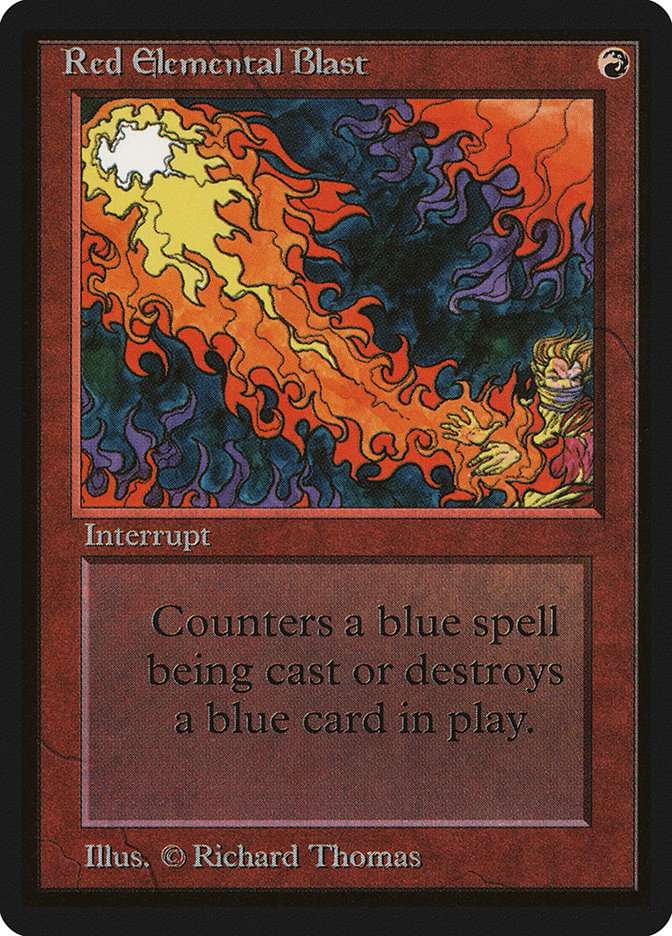
Two copies of Red Elemental Blast, primarily aimed at addressing Counter Magic and big threads like Control Magic. You don’t want to see your own Juzam swinging at you! It also provides a means to counter blue spells, a very common occurrence in Old School Magic. Red Elemental Blast is great at protecting your cards and to disrupt your opponent’s plans.
Two extra copies of Disenchant also provide protection against Control Magic and Blood Moon (remember, Birds, Moxen and Black Lotus can also provide the white mana that is needed to cast Disenchant) but also against The Abyys.
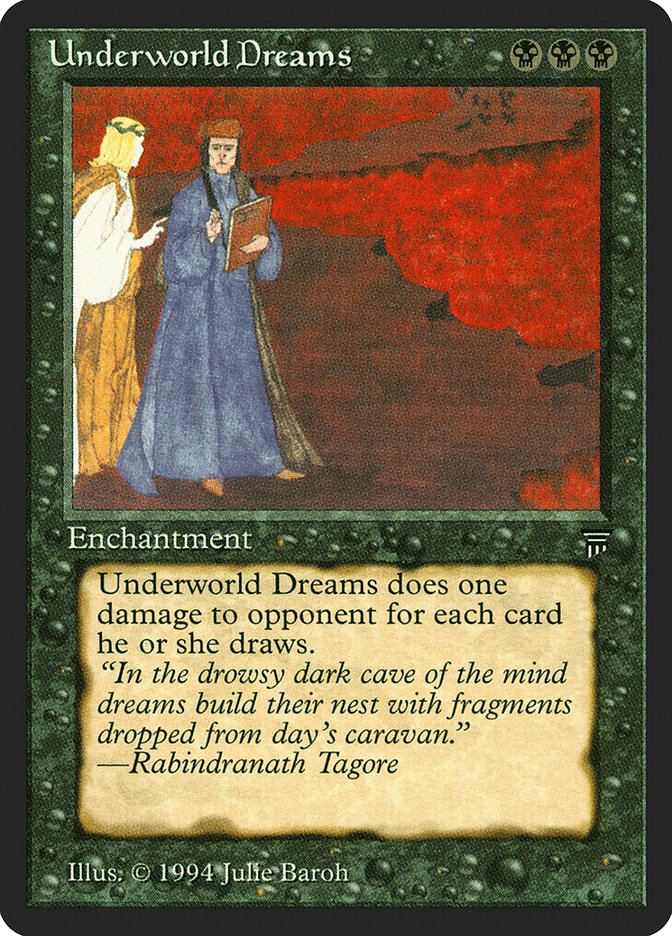
I also run an extra copy of Swords to Plowshares in the sideboard for against heavy creature builds and Armageddon to deal with Maze of Ith. I have tried Ice Storms in the past, but a well-timed Armageddon can be very brutal on your opponent. And three copies of Underworld Dreams against Control Decks or decks in general that rely heavy on card advantage. Our main board has all the “Draw 7”-spells so they can act as a nice finisher with Underworld Dreams on the board.

Rounding up
In conclusion, Machine Head emerges not only as a formidable contender on the battlefield but also as an immensely enjoyable deck to pilot. Despite its unconventional approach and seemingly greedy nature, I have managed to get good results with this deck. Having secured victory at the ODOL and achieving a top 8 finish at the Uthden Troll Cup 5 in November, Machine Head has proven its mettle against fierce competition. While I doubt its ability to consistently deliver strong results (Machine Head simply isn’t that type of deck), I do believe it is a good deck. It might not be a Tier 1 deck, but you will have a blast playing it!
It’s important to note that there’s no one-size-fits-all approach when it comes to building Machine Head. However, after experimenting with various iterations, I’ve found that the version presented here stands out as the optimal choice. Have fun brewing and I hope this post is an inspiration to play with balls to the wall.
For your entertainment I made a visual presentation of this Deck Tech. The video is narrated by our national Old School legend; Timmy! The video is on his YouTube channel at Timmy Talks! Check out the video below!




 The Edge-Man
Leave a comment