* more deck pictures will be added to the report once I receive them!
Knights of Thorn is no ordinary tournament. As the first Dutch Old School Magic tournament, it holds a special place in the hearts of players across the Netherlands and beyond. Since its inception in 2017, it has grown into a celebrated event that pays homage to the roots of the game, embracing the nostalgic 93/94 format and fostering a vibrant, passionate community. With its rich history and reputation, the tournament has long been a cornerstone of the Old School Magic scene—a true Mecca for those who love the classic game.
Yet somehow, despite my deep love for Old School Magic, this year marked my very first entry into Knights of Thorn. How I managed to miss out on such a legendary tournament before now is a mystery even to me. Perhaps timing, life circumstances, or simple oversight kept me from joining sooner. Whatever the reason, this year I finally had the opportunity to participate—and I could never have predicted what lay ahead.
I’ll recount my road to the finale and, of course, the incredible moment of triumph: winning Knights of Thorn! It’s an honor I still can hardly believe, and I feel immense gratitude. To take home the victory in a tournament with such a rich history is something I’ll cherish forever.
The Seventyfive – Shimmering heat
For the oldest Old School tournament in the Netherlands, I brought a deck archetype near and dear to my heart: Arabian Aggro. This wasn’t just any build—it was an updated version of the very first deck I played when I got into Old School Magic. My original deck had its moment in the spotlight, featured in a deck-tech video I made for the Timmy Talks channel. Revisiting and refining that deck for Knights of Thorn was like reuniting with an old friend—but this time, I came prepared to fix its weaknesses and unlock its full potential.
As I explained in the Timmy Talks video, my original Arabian Aggro deck had a few glaring flaws that sometimes wrecked my game plan. For one, Blood Moon was a nightmare for my mana base, often crippling my ability to play the cards I needed most. And while the deck’s high-speed, high-damage approach was thrilling, it came with a steep cost—to me as well as my opponents.
One of the biggest culprits was Serendib Efreet. While it’s undeniably powerful, the upkeep damage added up quickly, especially since 9 out of 10 times I cast it using City of Brass. I often found myself too low on life to use the card-draw advantage that Library was supposed to provide. To make matters worse, the deck’s control package—though effective—would sometimes stall my aggression when I needed to keep up the pressure. The result? A lot of close-call games that I narrowly scraped by or, worse, lost by the thinnest margins.
Heading into Knights of Thorn, I knew I had to resolve these issues if I wanted to compete with the best. After plenty of goldfishing and exploring different builds, I came across several variations closer to the original Lestree Zoo build. These decks featured Birds of Paradise, a card I’d initially overlooked but that made perfect sense for what I needed.
By adding three Birds of Paradise to the deck, swapping out City of Brass for a couple of basic lands, and including two Blood Moons in the sideboard, I turned my deck’s biggest weakness into a potential advantage. Suddenly, Blood Moon, which had been a problem card, became a weapon I could use to disrupt my opponents while keeping my mana base rock-solid.

The changes made all the difference. With Birds of Paradise to smooth out my mana, I could cast my threats without relying on City of Brass. The deck became more consistent, and the reduced self-inflicted damage meant I could actually draw extra cards off Sylvan Library when it mattered most.
The control elements made room for extra fire and no longer slowed down the deck’s aggressive nature. Instead, they complemented it, allowing me to dictate the pace of the game without pulling my punches. And when I sideboarded in Blood Moons? The look on my opponents’ faces as their mana bases crumbled said it all.
Winning Knights of Thorn with Arabian Aggro felt like coming full circle. It’s a deck I’ve loved since the beginning, and this updated version retained all the flavor and thrill of the original while ironing out its flaws. It was aggressive, versatile, and unapologetically fun to play—a perfect reflection of why I fell in love with Old School Magic in the first place.
Round & About
I’ll share how the deck performed round by round, the tough decisions I faced, and the unforgettable moments that led to my victory. Overall; Arabian Aggro is an absolute joy to play, and I couldn’t be happier of how it all came together.
Round 1: Bas Dietvorst
The tournament began with a great first-round matchup against Bas Dietvorst, a skilled player piloting a White-Black-Red deck built around Meekstone. His strategy was clear: deploy a swarm of fast, aggressive creatures with power two or less, such as Savannah Lions, Erg Raiders, and Hypnotic Specters, while leveraging Meekstone to keep larger creatures—like my Serendibs and Erhnams —tapped down and ineffective. To top it off, he had Serra Angels waiting in the wings, immune to the Meekstone’s effects and ready to close out games.
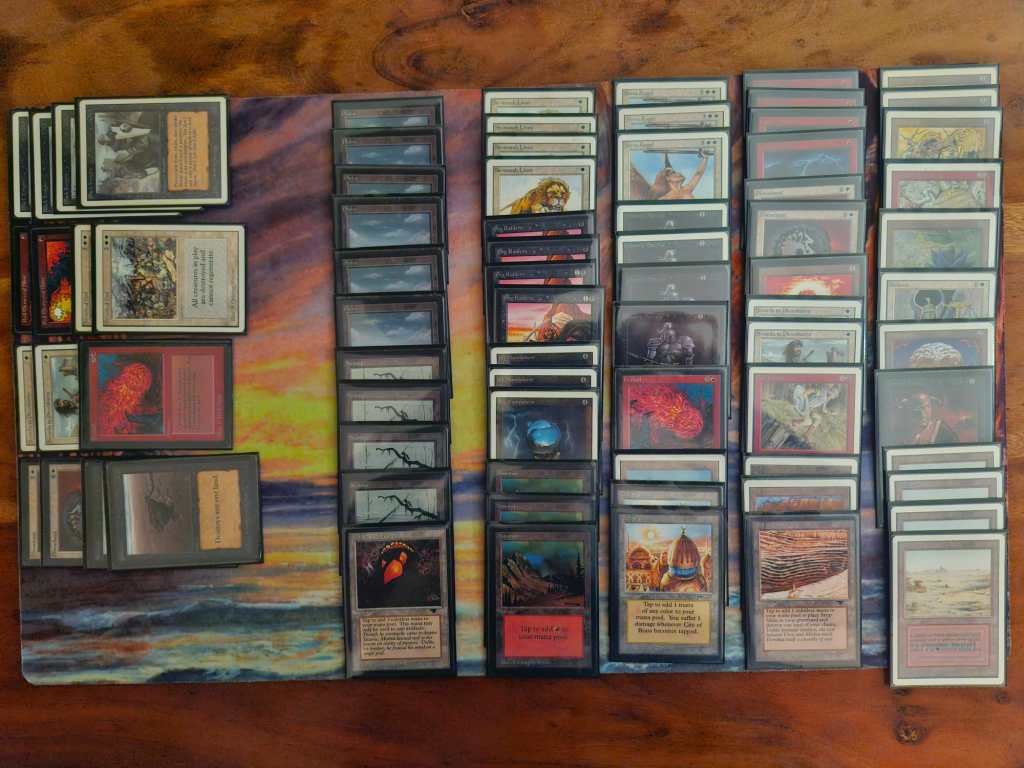
Bas’s deck was designed to grind opponents under the weight of his efficient creatures, forcing me to find and play the right answers at the right time. The Hypnotic Specters threatened to disrupt my hand early, however, I was fortunate to draw into the right removal spells just in time. Cards like Lightning Bolt and Chain Lightning helped me neutralize the immediate threats posed by the Specters and Savannah Lions before they could snowball into a problem. Bas’s deck was well-tuned and dangerous, and his strategy with Meekstone could have been devastating if I hadn’t drawn the right removal spells when I needed them most. His mix of early aggression and clever control elements tested my ability to adapt and react under pressure. By keeping up constant pressure and playing spells efficiently, I wore down his defenses and secured a 2-0 victory.
Winning this round felt like an excellent start to the tournament. It gave me the confidence to trust my deck and my game plan.
Round 2: Gijsbert Haakman
After a strong start in Round 1, I entered the second round feeling confident. That confidence, however, was quickly shattered by Gijsbert, whose beautifully crafted deck delivered me a reality check.
Gijsbert was running a mix of White, Blue, and Green cards that blended precision, versatility, and elegance. His deck was an eclectic collection of powerful one-offs, making it nearly impossible to predict his next move or sideboard effectively against him. Every turn felt like a new puzzle to solve, and Gijsbert always seemed to have the right piece at the right time.
One of the most significant problems I faced was Spirit Link, which Gijsbert expertly deployed to neutralize my Serendib Efreets. The enchantment not only nullified my damage output but also bolstered his life total—turning one of my strongest assets into a liability. With my deck lacking reliable answers to enchantments (apart from two Tranquilities sitting in the sideboard), my options were painfully limited.

In both games, I found myself forced to take desperate measures, like using Psionic Blast on my own Serendib Efreet just to stop the bleeding. But by then, the damage—both literal and figurative—had already been done. Gijsbert kept the pressure on with his well-balanced threats, leaving me scrambling for answers that never came. The result? A decisive and humbling 0-2 loss.
In hindsight, this loss might have been a blessing in disguise. The structure of the tournament allowed for a single loss while still leaving the door open to make the top 8. And losing early has its own peculiar advantage: it often means avoiding the sharpest “spike” players in the following rounds, giving you a chance to recalibrate and regain momentum.
Still, I knew Round 3 would be crucial. A second loss would all but end my chances of competing for the top prize—not that that mattered. At its core, this tournament was about the love of the game.
Round 3: Arnoud Punt
After the humbling defeat in Round 2, I entered Round 3 with a renewed focus, ready to take on Arnoud. He was piloting an intriguing take on Counterburn, spiced up with a splash of black. It was a fascinating strategy: control the early game by removing threats, clear the board of opposing creatures, and then swing for the win with his own.
From the start, it was clear this match-up would be a test of endurance and resource management. Arnoud’s deck had the tools to slow down my aggression, forcing me to carefully time my plays. With his burn spells and counter-magic at the ready, he effectively dismantled my early threats, leaving the battlefield clear for his own creatures to trample over me.
But where Arnoud’s deck sought to control and chip away, mine thrived on sheer efficiency and redundancy. Match after match, I found myself with just a little more of everything: more creatures than he could take out, while I had plenty of burn to remove his. While Arnoud’s strategy was clever and his execution sharp, the relentless pace of my Arabian Aggro eventually overwhelmed his defenses.
The games were intense and fun, showcasing the interplay of two archetypes. In the end, though, my deck’s ability to keep up the pressure proved decisive. I was able to outpace his game plan and claim victory, 2-0, moving on with renewed momentum.
Round 4: Robbie van Berkel
With the utmost respect for my previous opponents, I have to say that Round 4 against Robbie was my first truly serious challenge of the day. While all previous matches where against great players, Robbie is a very skilled and experienced player, piloting his Ehrnam on Ice deck—a finely tuned, prize-winning build that he’s mastered over countless games. Facing him was a test of not just my deck but also my skill and decision-making under pressure.
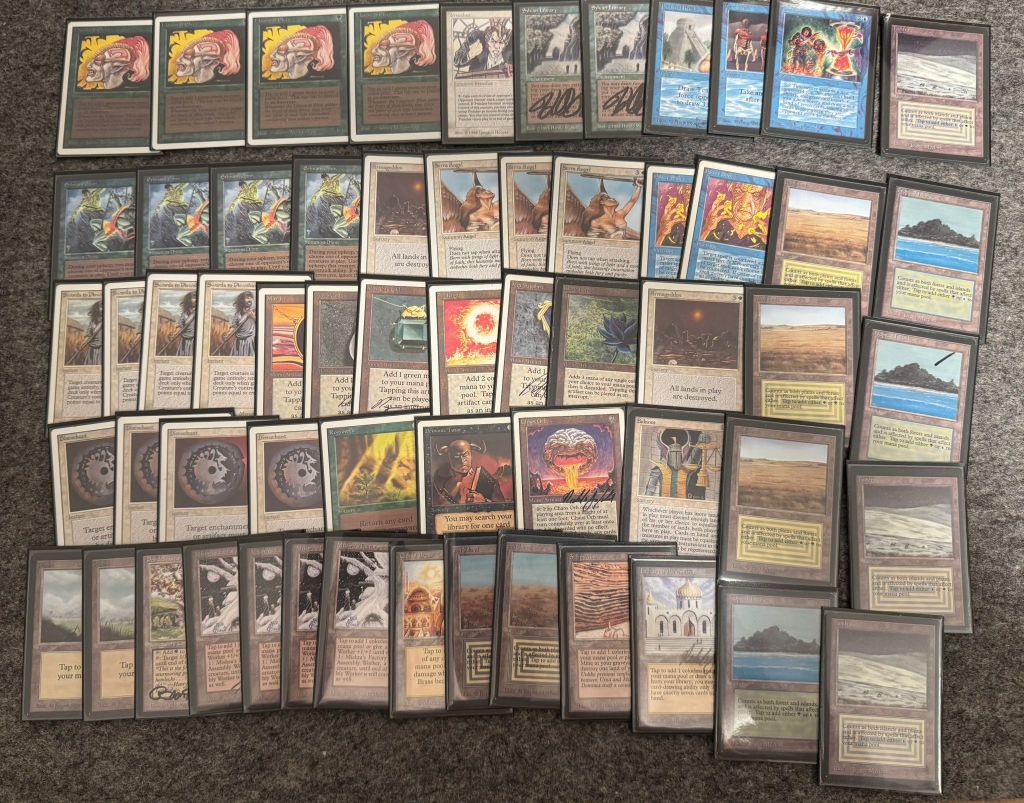
From the start, Robbie’s deck demonstrated its efficiency. Packed with powerful cards and synergistic interactions, it threatened to overwhelm me early. I knew I had to act fast and keep up the pressure if I wanted a chance to take the game.
Early on, I managed to eliminate Robbie’s Preacher, a card that could have been devastating to my game plan. Removing his mana-ramping Elves was another key play, slowing down his ability to accelerate into bigger threats like Ehrnam Djinn or Serra Angel. This allowed me to dictate the pace of the game early on, keeping him on the back foot while my deck executed its aggressive strategy perfectly.
The second match was nothing short of spectacular. Both of us had excellent opening hands, and for much of the game, it felt like we were mirroring each other’s moves. With Sylvan Library on both sides of the battlefield, we each played aggressively, taking the full 8 damage to draw 3 cards rather than 1—an all-in approach that spoke to the intensity of the match.
It was a calculated risk for both of us, but fortune favored me this time. Drawing into a series of well-timed burn spells, I was able to push Robbie’s life total dangerously low early in the game. While his deck has an incredible ability to recover from difficult board states, the constant pressure I maintained made it impossible for him to stabilize.
Robbie’s Ehrnam on Ice deck is a masterpiece, and his piloting of it was as sharp as ever. Emerging victorious from this round felt like a major accomplishment. Robbie pushed me and my deck to their limits, and the win was hard-earned. It was a critical moment in the tournament, proving that I could stand toe-to-toe with one of the best and come out on top.
With three wins and one loss under my belt, I was still in the running for the top 8, and my confidence was growing stronger with every round.
Round 5: Frank van de Lustgraaf
My fifth-round opponent was Frank, someone I genuinely admire both as a player and as a person. Frank is a fantastic guy—always friendly, social, and a joy to play against. His deck, however, was no walk in the park. Frank was piloting a Green deck with a splash of Blue, a strategy that focused on swarming the board with mana-efficient creatures and delivering massive blows using Giant Growth and Berserk.

This kind of deck is a powerhouse when it gets going. Truthfully, I had been dreading a match-up like this one. In the weeks leading up to the tournament, I’d faced similar decks at my kitchen table while playtesting with Triple-S, and they had given me no end of trouble.
Despite my apprehension, my deck rose to the challenge. Both games played out fast and smooth, with my deck performing exactly as it was designed to. I was able to respond to Frank’s early aggression with timely removal, keeping his board state manageable and preventing him from setting up his lethal combos.
While Frank’s deck was as threatening as expected, my early pressure and burn spells left little room for him to execute his game plan. In the end, I was able to secure a 2-0 victory.
By this point in the day, the tournament schedule was running behind its original plan. That was fine, but after a night with little to no sleep prior to the tournament, I was beginning to feel the effects of fatigue setting in. As anyone who’s played long tournaments knows, tiredness can lead to sloppiness, and I was keenly aware of how easy it would be to make mistakes at this stage.
With a spot in the Top 8 still within reach, I resolved to stay sharp and push through the weariness.
Round 6: Erwin Demmer
The sixth and final round of the Swiss was against none other than my good buddy, Demmer. Playing against Demmer is always a blast—especially when he’s had a drink or two. Slightly intoxicated or not, he remains as sharp as a knife, making every game against him a mix of fun and focus. I knew I had to stay on my toes if I wanted to secure the win, especially since this was the match that could solidify my place in the Top 8.
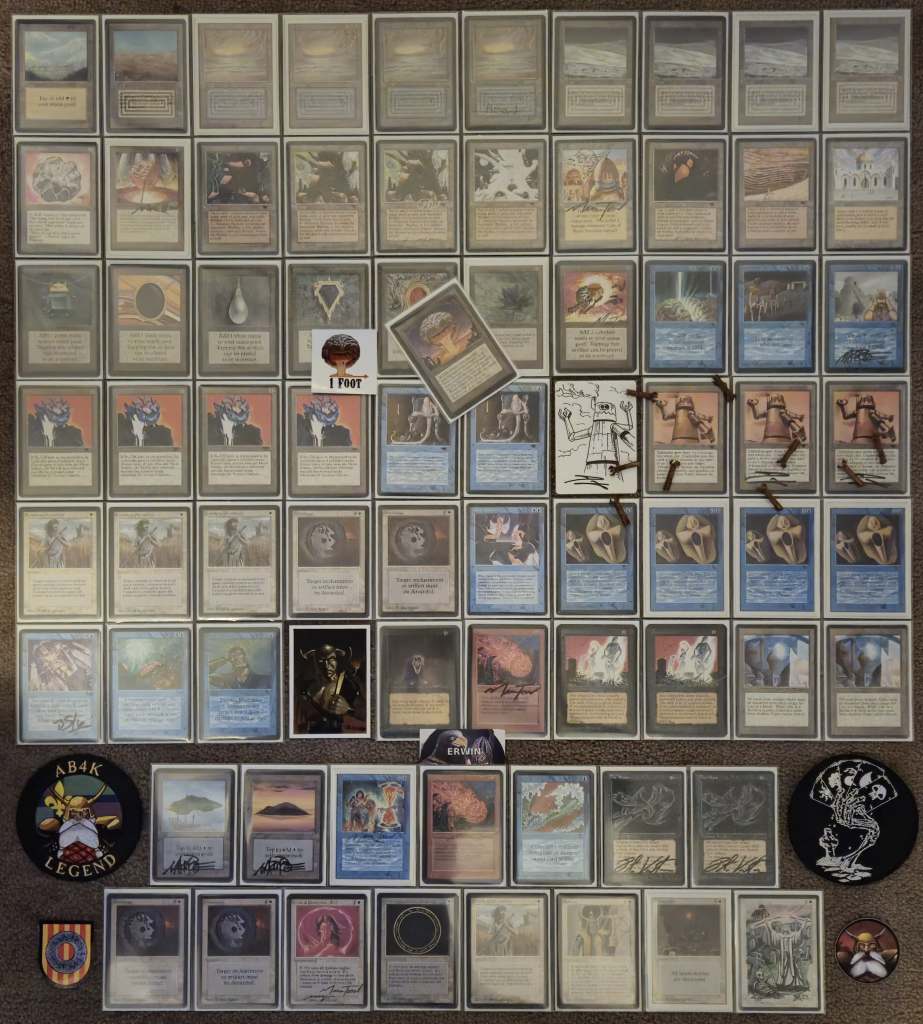
The first game started strong for me. I applied early pressure with my creatures and burn spells, luck was once again on my side. Demmer’s deck just didn’t deliver the answers he needed, despite being packed with plenty of tools to deal with my threats.
His Cities in a Bottle, two of which were in his main deck, loomed as a potential disaster for me. But without Cities of Brass in my deck, they weren’t nearly as devastating as they could have been. Meanwhile, my Pixies were perfectly positioned to handle his artifact creatures, and I kept pushing burn spells directly to his face. The match ended quickly in my favor, which gave me some breathing room heading into the second game.
The second match was a different story. Demmer hit an early Su-Chi and quickly cleared my blockers, making short work of my life total. His deck fired on all cylinders. I was on my knees really fast. 1-1.
By now my misstep of agreeing to play at a table too close to the bar began to catch up with me. With each passing moment, more beers were handed to Demmer, and he returned the favor by offering drinks to others in the room. I couldn’t help but get caught up in the hilarity of the moment, even stepping away briefly to answer nature’s call. When I came back, Demmer was happily scouting the room for drinking buddies, juggling extra beers in his hands like a champion.
By the time we returned to our game, we were running low on time—not just in the match, but in the Swiss rounds as a whole. Honestly, though, it hardly seemed to matter anymore. The combination of camaraderie, laughter, and a few too many drinks turned our final game into more of a sideshow than a serious battle.
Halfway through the game, we both just sort of… forgot what we were doing. The cards were on the table, but our attention was at the bar. We decided to call it a draw and spent the rest of the round toasting to good times, great friends, and the spirit of Old School Magic.
This round was a perfect reminder of why I love this community so much. Sure, the competition is exciting, and winning is a thrill, but it’s moments like these—laughing, playing, and sharing drinks with people like Demmer—that make tournaments like Knights of Thorn truly unforgettable.
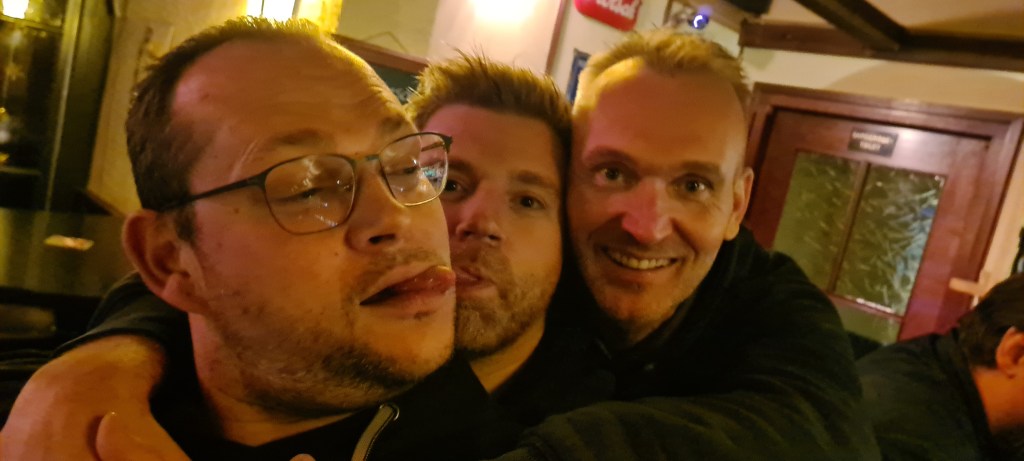
In hind-sight our draw wasn’t the best of ideas, we should have done an Orb-flip or something like that. I don’t think it would have mattered much but some people do play for results and these kind of beer shenanigans aren’t always appreciated by everyone.
Quarterfinals: Alex Rutten
In the top 8 my first opponent was none other than Alex—one of the best Magic players I know. Heading into the match, I honestly didn’t expect to win. Alex is a skilled, focused, and methodical player with a beautifully crafted deck filled with stunning altered cards. But even with the odds stacked against me, I resolved to give it my all.
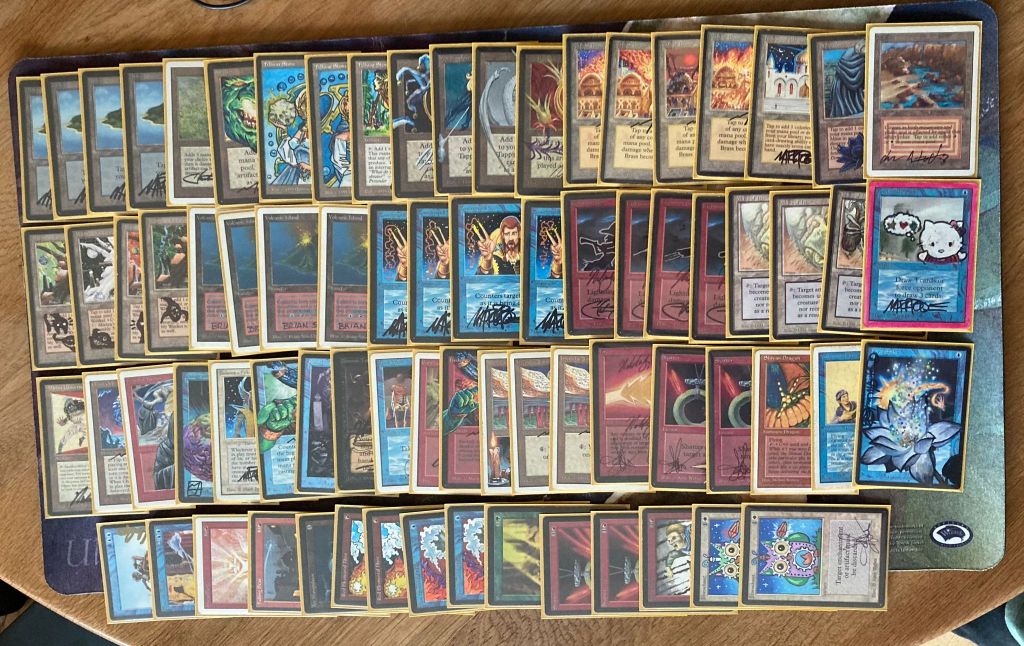
Alex’s deck was as powerful as it was gorgeous, and his methodical playstyle was on full display. Every move felt deliberate, every card he played a calculated decision. I tried to match his focus, but his deck overwhelmed me in the first game. It was a humbling start, but I wasn’t ready to throw in the towel just yet.
The second game was when my deck’s hidden potential truly began to shine, thanks to Blood Moon. Alex’s deck relied heavily on non-basic lands, and the Blood Moon slowed him down just enough for me to find a foothold.
The highlight of the match, however, was when I managed to Fork a crucial Counterspell. Fork has always been one of my favorite cards—I fell in love with it back in 1995, when I first started playing Magic. Even though it’s not a standout card in the Old School format, I decided to include it in my deck for sentimental reasons. Seeing it pay off in such a critical moment was incredibly satisfying and nostalgic.
The final game was a battle of two very different playstyles. Alex, as always, took his time, thinking through every possible outcome before making a move. I’ve always admired that level of dedication and precision. In contrast, I tend to play more intuitively, reacting to what’s happening in the moment rather than planning every step ahead.
Somehow, my approach worked this time. I managed to keep the pressure on and navigate through Alex’s defenses, ultimately clinching the victory. Recovering from 0-1 to 2-1 felt incredible, especially against a player of Alex’s caliber. This wasn’t just a win—it was a milestone. It was my first-ever victory against Alex, and it came during one of the most significant tournaments I’ve played in. Alex’s skill and focus pushed me to my limits, and I walked away from the match with a deeper respect for his approach to the game.
Semifinals: Fulco van der Wees
The semifinal round was a showdown against Fulco, who was piloting an iconic build known as Deadguy Ale. This deck is a powerhouse, and I’ve faced it enough times to know both its strengths and its potential weaknesses. That familiarity gave me some confidence going in, but I also knew Fulco is a skilled player who could capitalize on his deck strengths. I had zero room for any mistakes.
The first game started off well for me, with a strong board state that seemed poised to deliver the win. But Deadguy Ale has tricks up its sleeve, and Fulco’s Time Twister paired with Underworld Dreams killed me with a swift but cruel stroke. Drawing seven cards with an Underworld Dreams on the battlefield is a nightmare scenario, and the 7 damage to my face left me reeling. To top it off, I was topdecking for the burn spell that could have sealed the game, but it wasn’t meant to be. Fulco took the win, and I knew I needed to regroup for the second game.
I brought in two Blood Moons and one Tranquility during sideboarding, hoping to exploit Deadguy Ale’s reliance on non-basic lands and potentially clear out any pesky enchantments like Underworld Dreams. My plan was simple: stick to the deck’s core strategy of applying pressure and burn, but with just enough disruption to tilt the match in my favor.
In the second game, my deck performed exactly as it was designed to. I kept up steady pressure, burning through Fulco’s defenses while denying him the time to set up his synergies. With a few lucky draws and a relentless focus on my game plan, I secured the win and forced a deciding third game.
The final game was a nail-biter. Both of us were in topdeck mode, each drawing and playing one card at a time, hoping for the piece that would turn the tide. My heart was racing as the turns stretched on, but eventually, luck was on my side. I drew just what I needed to close out the game and claim victory.
This match was a rollercoaster of emotions, from the crushing defeat of Game 1 to the tense, hard-fought victory in Game 3. Fulco’s Deadguy Ale is a legendary archetype for a reason—it’s versatile, powerful, and capable of punishing even the smallest misstep. But in the end, sticking to my deck’s strengths and trusting the process paid off.
The Finale
Reaching the finals of Knights of Thorn felt like a surreal experience. Coming into the tournament, my goal was to simply enjoy the day, and I would have been thrilled with just making the Top 8. But suddenly, there I was—sitting at the Number 1 table, with a genuine shot at the title. It’s a feeling that’s hard to put into words. On one hand, you’re grateful and happy just to be there, taking in the moment. On the other, you can’t help but feel the nerves creep in, even if you’re someone who doesn’t normally play for results. The thought of winning a tournament with such a rich history is enough to shake even the most casual mindset.
My opponent for the final match was Jordan, a player I’ve admired since the first time I met him—back at UTC, I believe. My first impression of Jordan was that he looked like that guy from Bottom, but with an air of sophistication. He has this unique vibe: part wise sage, part man of the moment. Jordan is not only a great guy but also an incredibly skilled and consistent player, the kind of competitor who regularly nets impressive results—though he’d probably deny it. Facing him in the finals felt like an honor in itself, and I knew I was in for a challenge.
Jordan was piloting UW Flyers, a highly popular and powerful deck archetype—and for good reason. It combines efficient creatures, disruptive spells, and a solid game plan, making it a force to be reckoned with in Old School Magic. I knew I was in for a tough match, and Jordan didn’t disappoint.
The first game was an uphill battle from the start. Jordan expertly controlled the tempo, playing three Counterspells in subsequent turns. Every attempt I made to build momentum was shut down, as he countered all the right spells at exactly the right time. My deck relies on quickly establishing a board presence, and without that, the game felt hopeless. After a valiant struggle, I lost, knowing I needed to adjust my approach.
Between games, I decided not to sideboard in Elemental Blasts, choosing instead to solely trust in my Blood Moons. It was a calculated risk, but I hoped the disruption Blood Moon could bring would be enough to even the odds.
The second game started with both Jordan and I being forced to mulligan. My six-card hand was a gamble—a very greedy keep. It included a Black Lotus, two Birds of Paradise, a Sylvan Library and little else in terms of threats. I figured that if I could stabilize with mana in the first few turns, and I’d draw into the threats I needed with help of the Sylvan—and thankfully, I did.
I hit my stride by the third or forth turn, drawing into the creatures I needed to apply pressure. A late Blood Moon turned the tide, shutting down Jordan’s Maze of Ith and Mishra’s Factories, effectively clearing the way for my creatures to deal damage. The gamble had paid off, and I evened the match at 1-1.
The final game started with a bit of bad luck for Jordan, as he was forced to mulligan to five cards. Not being on the draw made the situation even tougher for him—it felt like a self-inflicted Mind Twist, and I couldn’t help but feel for him. That said, I knew I had to stay focused.
My opening hand was another risky one. I had two Kird Apes, a Blood Moon, but no red mana-producing lands—only a Birds of Paradise to bridge the gap. I knew an early Swords to Plowshares on the Birds would be disastrous, but I decided to roll the dice.
The gamble paid off again. I drew into a Serendib Efreet, then another, and eventually played the Blood Moon. Jordan was able to clear the Blood Moon off the board, but not before it had already done significant damage, forcing him to take 6 damage in the process. He managed to remove one of my Serendibs, but the pressure didn’t let up as I followed with an Ehrnam Djinn.
Jordan, ever the skilled player, kept finding answers and managed to hold me off longer than I expected. Despite the setback, I was able to whittle him down to 8 life, setting up the final sequence. With a Serendib Efreet and an Ehrnam Djinn on the battlefield, I swung for 7 damage, bringing him down to 1 life. My final draw was an Ancestral Recall, when he didn’t counter it I knew a Psionic Blast would net me the win. And sure enough, I drew the Psionic Blast I needed to deal the final blow.
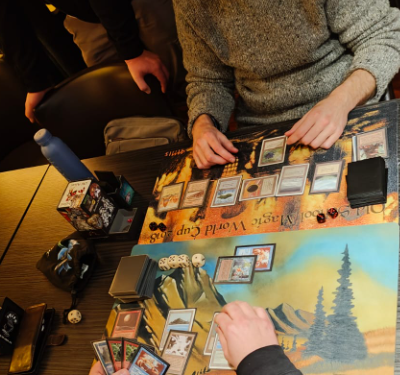
And with that, I claimed the victory and the Knights of Thorn title! It was an exhilarating match, filled with ups and downs, gambles that paid off, and a worthy opponent who pushed me to my limits. Jordan played phenomenally, as always, and I have immense respect for his skill and sportsmanship.
Winning this tournament felt like a dream come true, and it’s a moment I’ll carry with me for a long time. From the rich history of Knights of Thorn to the incredible community of players, this experience was about so much more than the title. It was a celebration of Old School Magic, and I’m proud to have been part of it.

Finale words of Appreciation
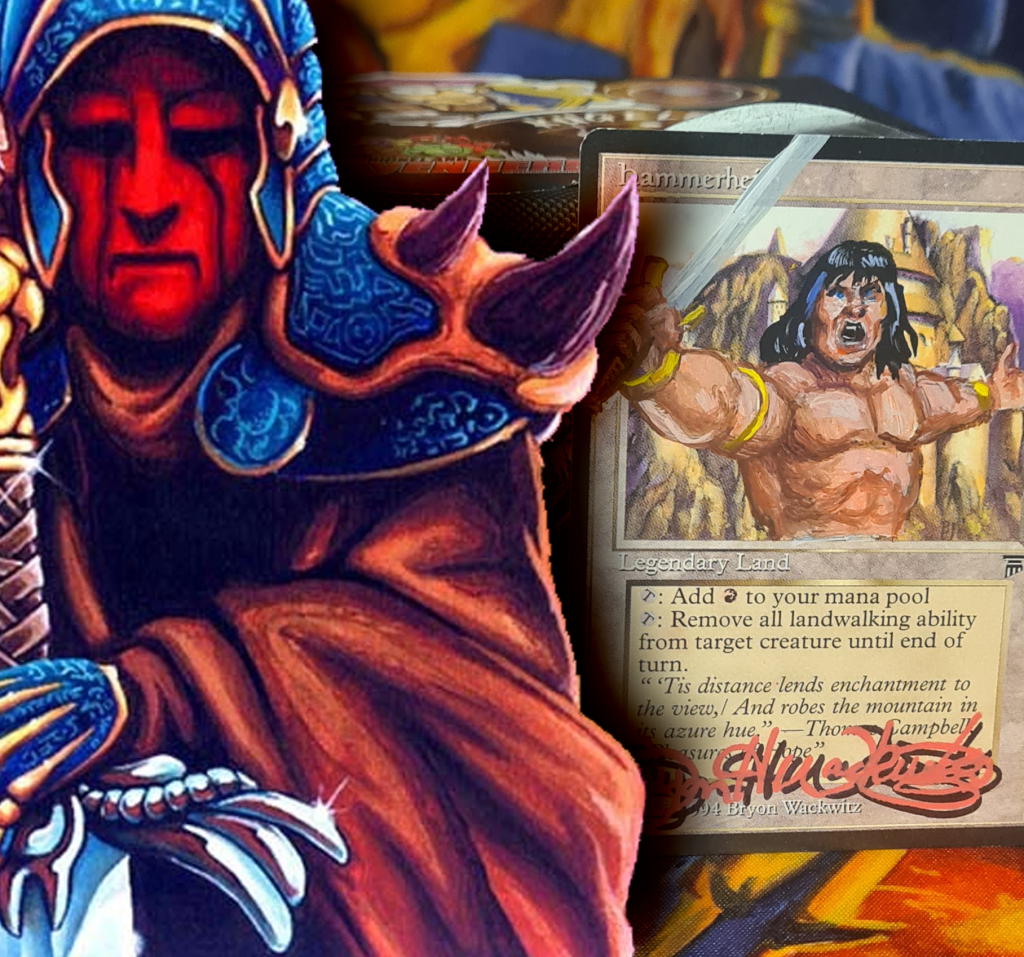
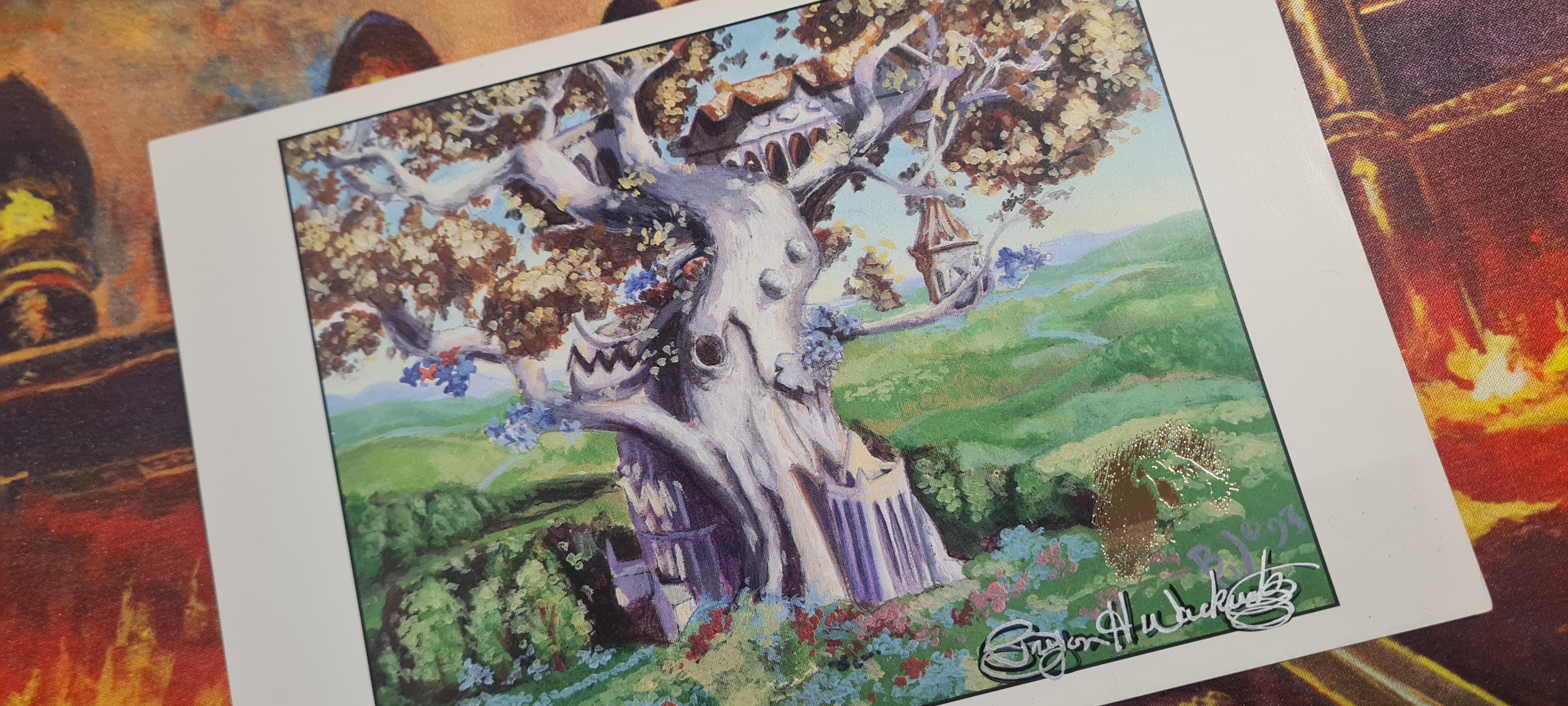
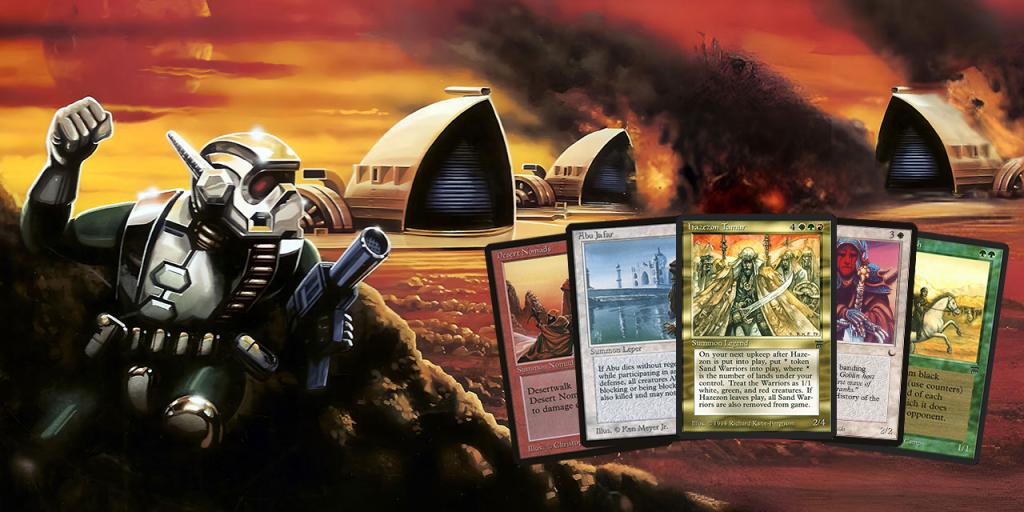
A huge thank you to Mari, the mastermind behind this incredible tournament! Mari ran an absolutely fantastic event, seamlessly managing everything from the matches to all the extra fun activities that made the day so special. From raffles to auctions, there was never a dull moment, and the atmosphere was electric throughout. I haven’t even mentioned the attendance of the legendary Bryon Wackwitz, who took the experience to the next level. His Edge-Man alter for me was nothing short of breathtaking—a true masterpiece that I’ll treasure forever. Mari, you outdid yourself, and I’m so grateful to have been part of this unforgettable day. Thank you for everything!



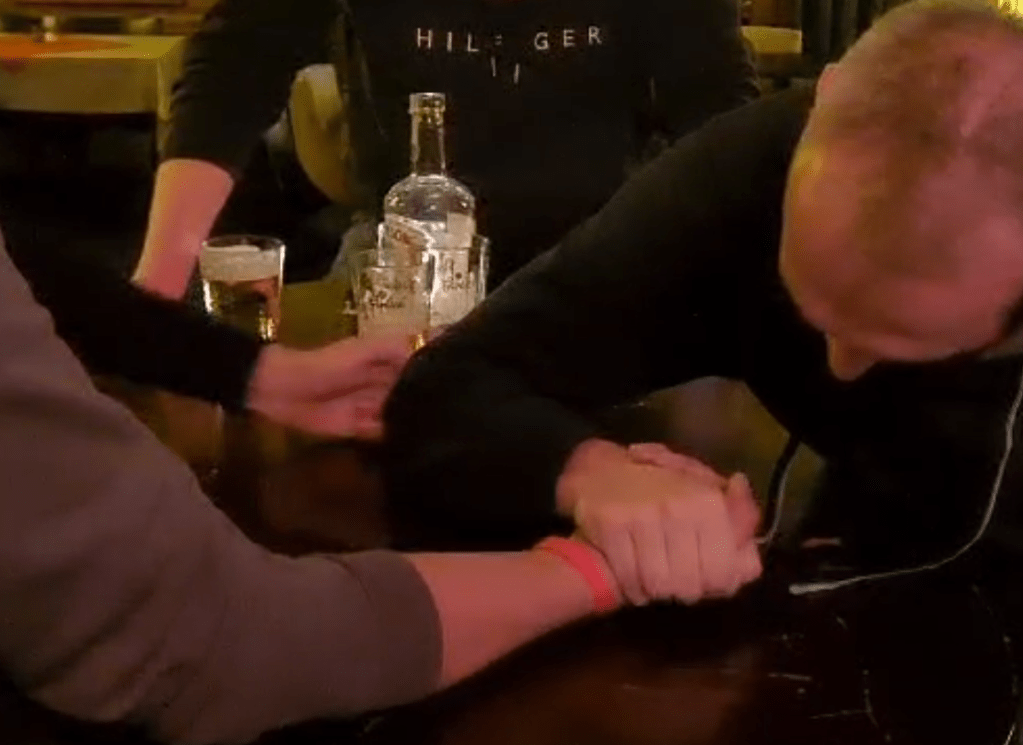
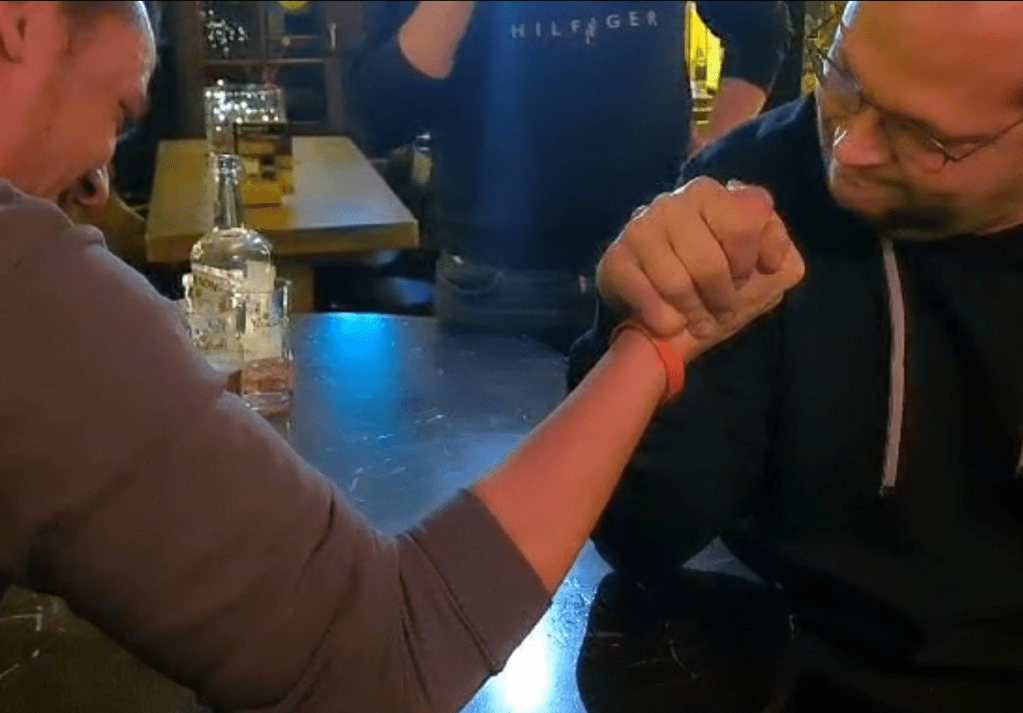
P.S. I wasn’t the only champion at Knights of Thorn. Enjoy these two pictures of the drunk 4K Warriors destroying the convidence of local youth by defeating them in a match of armwrestling. Fretje teared his own shoulder off and Demmer took forever but damn it, they did it! The true heroes of Deventer and the Avengers of middle-aged men.

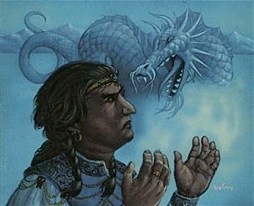
 The Edge-Man
Leave a comment