A double deck tech for Old School RUG… told through The Big Lebowski
If you’ve played Old School long enough, you’ve seen this movie before: someone lays down a Taiga, a blue Mox, and casts Kird Ape, and you instantly file the matchup away as “RUG.” Easy!
Except… it’s not. RUG has two distinct builds that share about 90% of the same cards, yet play completely differently: Aggro converts cards into damage, while Tempo converts turns into damage.
This post is two deck techs rolled into one: RUG Aggro and RUG Tempo. They share a bunch of the same cards—same colors, same creature spine, same classic Old School power package and burn—but they play wildly differently. Same rug. Completely different room.
And because “RUG” is literally the theme, we’re writing this one with Lebowski energy: two rugs, two personalities, two ways to win a game that looks identical on turn one.
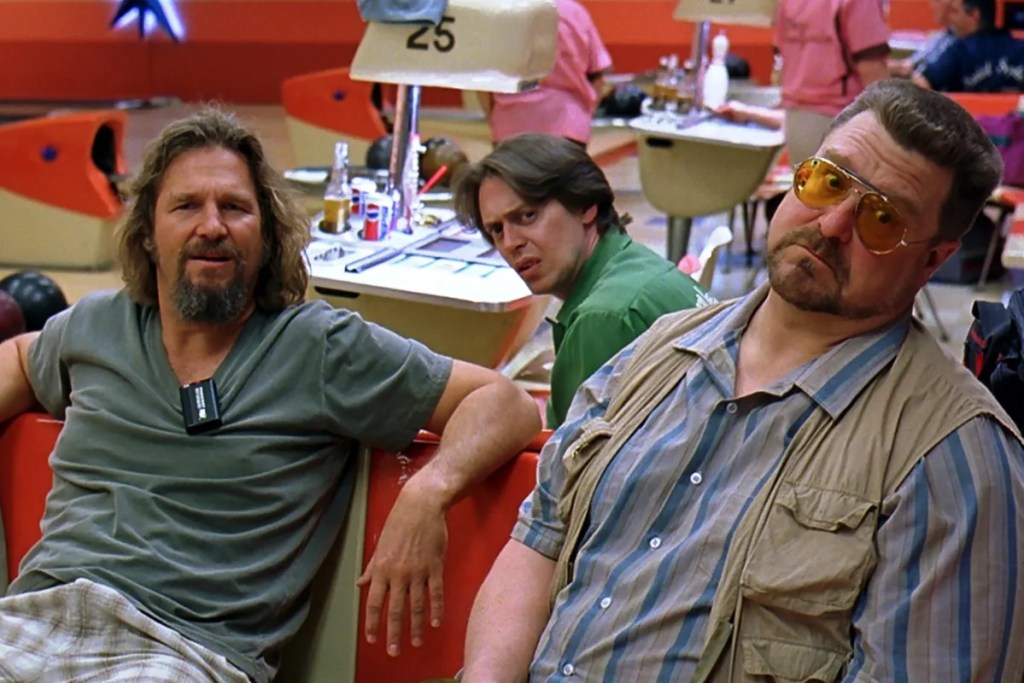
- Walter (Aggro): confrontational, explosive, ends arguments with damage.
- The Dude (Tempo): more laid-back, reactive, wins by making you waste turns until you fall over.
The Rug: the shared RUG shell
Before we split into Walter and Dude, it’s worth calling out what’s the same, because that’s what creates the illusion.
Both decks start from a familiar core:
The creature suite:
- Kird Ape
- Argothian Pixies
- Serendib Efreet
- Erhnam Djinn
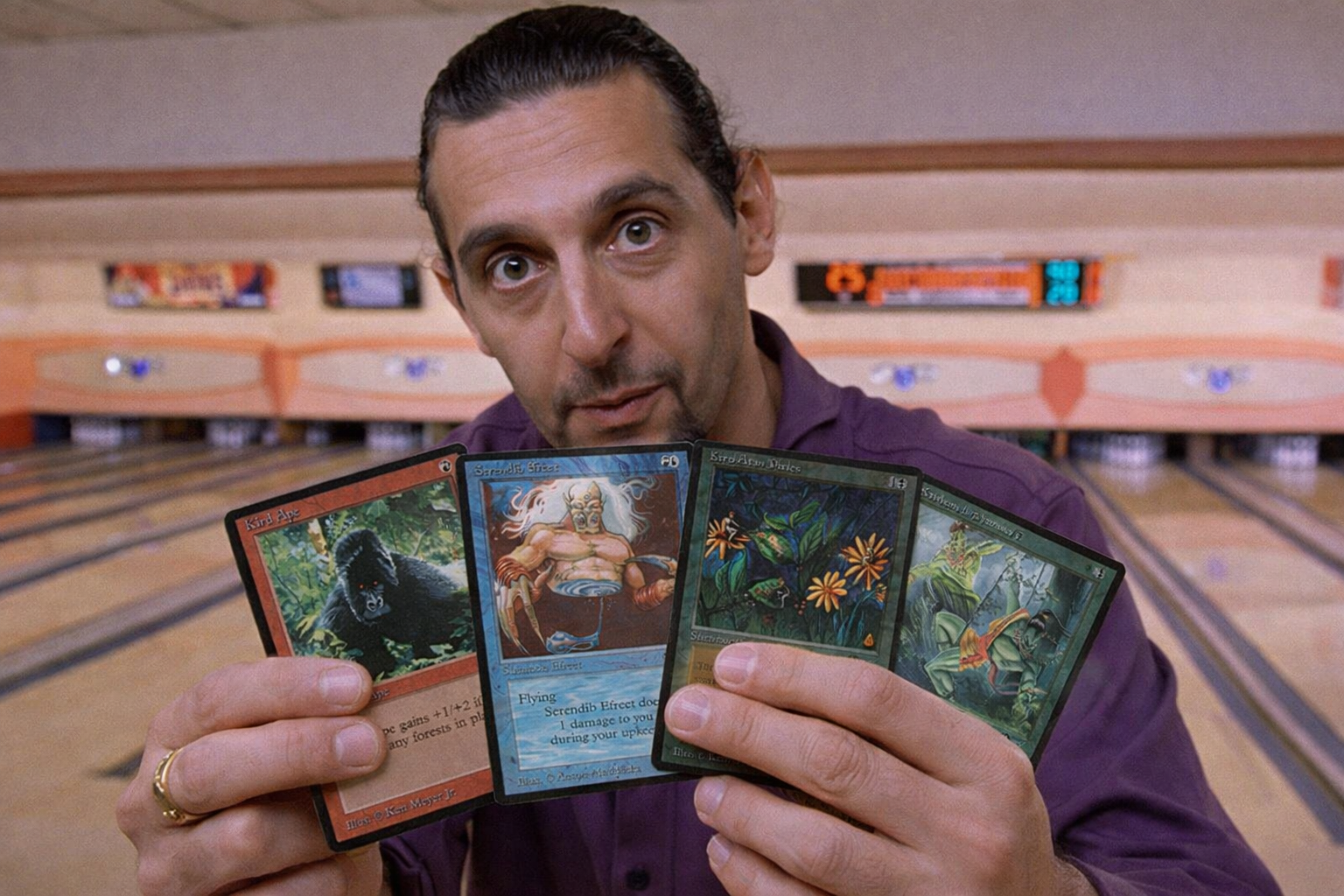
That’s the Old School RUG identity in a nutshell: cheap pressure, evasive pressure, and a midgame hammer that ends the game if the opponent stumbles.
Power & utility:

- Ancestral Recall
- Time Walk
- Regrowth
- Mana Drain
- Black Lotus
- Moxen
- Sol Ring
- Strip Mine
- Library of Alexandria
- Chaos Orb
- Burn spells
Basically the restricted “good stuff” list, combined with burn. The burn is so you can “pull the fucking trigger ’til it goes ‘click‘”. Add your standard mana base made out of duals plus a couple City of Brass to smooth everything out and you are set.
So why do they play differently? Because once the creature foundation is identical, the spell package becomes the personality.
Deck 1: Walter RUG Aggro
“Mark it zero!”
The Walter Build
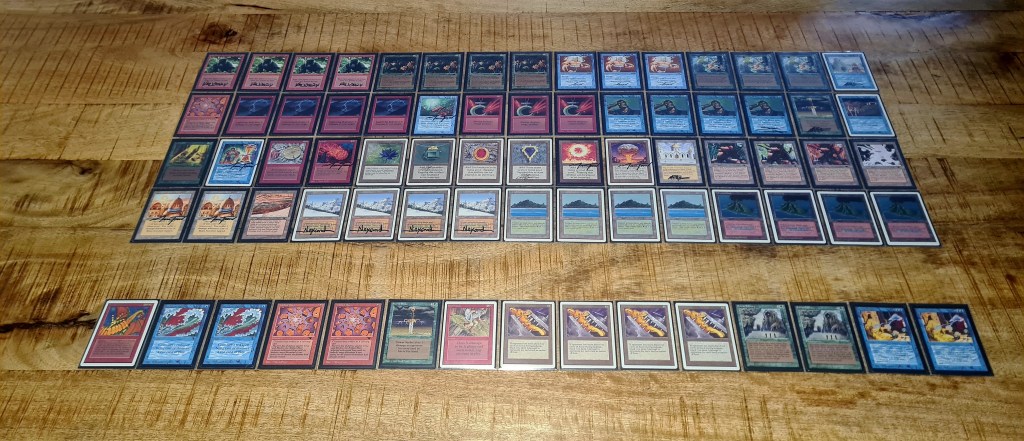
- 4 Kird Ape
- 4 Argothian Pixies
- 3 Serendib Efreet
- 3 Erhnam Djinn
- 1 Ancestral Recall
- 1 Artifact Blast
- 4 Lightning Bolt
- 1 Mana Drain
- 3 Shatter
- 4 Psionic Blast
- 1 Storm Seeker
- 1 Time Walk
- 1 Regrowth
- 1 Timetwister
- 1 Wheel of Fortune
- 1 Fireball
- 1 Black Lotus
- 1 Mox Emerald
- 1 Mox Ruby
- 1 Mox Sapphire
- 1 Sol Ring
- 1 Chaos Orb
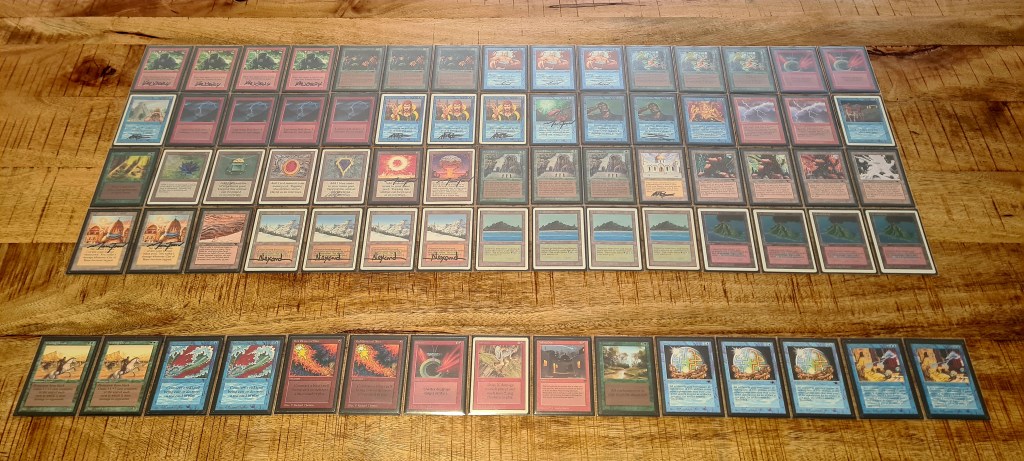
- 1 Library of Alex.
- 4 Mishra’s Factory
- 2 City of Brass
- 1 Strip Mine
- 4 Taiga
- 4 Tropical Island
- 4 Volcanic Island
Sideboard
- 1 Shivan Dragon
- 2 Blue Elemental Blast
- 2 Artifact Blast
- 1 Storm Seeker
- 1 Earthquake
- 4 Black Vise
- 2 Sylvan Library
- 2 Control Magic
If you’ve ever watched Walter Sobchak solve a problem, you know the vibe: he doesn’t de-escalate, he converts the whole situation into a fight and then acts surprised that anyone objects.
That’s this deck.
Walter simply wins by shortening the game. He turns cards into damage and he does it fast. That’s his entire plan.

Walter doesn’t want a long conversation. He wants you to stumble once—miss a land drop, tap out at the wrong time, block poorly—and then the game ends in a blur.
Why these creatures?
Kird Apes and Argothian Pixies are your early “get on the board” lines. They maximize early pressure. Pixies in particular help you keep connecting through the kinds of blockers that try to gum up the ground (and the weird factory nonsense people hide behind). Walter doesn’t want a fair fight—he wants the room on fire before anyone finds their coat.
Serendib Efreet, the classic “I’ll race you and I don’t care if I take a little damage.” It pressures control and goes over the top of ground stalls.
Erhnam Djinn is the “conversation ender.” You want a big, clean clock that punishes anyone who can’t keep up. Three Erhnam’s will do just that.
In Walter terms: these are your bowling ball to the kneecap. Simple. Effective. Not subtle.
Burn as a personality trait
Walter Aggro runs an impressive “this is going to hurt” package:
- 4 Lightning Bolt
- 4 Psionic Blast
- 1 Storm Seeker
- 1 Fireball
This burn suite isn’t just removal. It’s reach. It’s also a constant threat that makes blocking miserable, makes racing impossible, and turns any small tempo win into immediate lethal.
Lightning Bolt is Walter’s first instinct: fast, efficient, and pointed straight at the problem—creature or face, doesn’t matter. Psionic Blast is peak Walter: it doesn’t care about consequences, it cares about results.
Storm Seeker is the sudden escalation: the “You are entering a world of pain!” burst that turns a close race into a quick finish. Fireball is the closing argument: messy, loud, and final—when Walter decides the conversation is over, it’s “OVER THE LINE!” .
This deck doesn’t ask “how do I survive?” This deck asks “how do I make your life total stop being a number?”
Reload!
When Walter runs out of cards, he doesn’t slow down— he simply reloads and keeps on swinging!
- Wheel of Fortune
- Timetwister
This is Walter flipping the table when the game gets complicated. You dump threats, trade resources, fire off burn… and when your hand runs low, you reset the room and draw a fresh grip. The difference is: Walter is built to use those fresh sevens better than you are—because his cards are cheaper, his threats are already on board, and his burn turns any stumble into lethal.
That matters a ton in Old School, because a lot of decks stabilize on the assumption that the aggro deck runs out of gas. Walter doesn’t run out of gas—Walter finds a way to argue with physics.
Regrowth is part of that same story: it turns your best spell into “yeah, we’re doing that again.”
Why 3 Shatter main?
3 Shatter main is Walter kicking the door down: Su-Chi, Factory defense plans, random artifacts that buy time—gone. It keeps the damage flowing.
And then there’s the one cheeky Artifact Blast (plus Mana Drain) for the cards that try to stop the movie—City in a Bottle, Winter Orb, etc. “Shut the fuck up, Donny!”
Walter doesn’t negotiate with problem permanents—he removes them and continues the monologue. Walter doesn’t spend time arguing on the stack. He interacts by clearing whatever slows the clock (Shatter, burn) and by resetting the room when he runs out of gas (Wheel / Twister).
Sideboard philosophy: punish, punish, punish
The Walter sideboard is direct. These are the practical tools—answers that keep the clock running, even when the opponent is trying to drag you into a long conversation.
- 4 Black Vise: because Walter has no patience for long, polite control games. Vise gets even nastier because your reload buttons (Wheel/Twister) can give them a full grip… and then punish them for having it. If you’re tapping out, Walter is happy. If you’re holding cards, Walter is even happier.
- 2 Artifact Blast: extra outs to ‘stop-the-movie’ artifacts
- 2 Blue Elemental Blast: mirror / red decks / protect your mana base against Blood Moon
- 2 Control Magic: answer big idiots by stealing them
- 1 Earthquake: reset button vs go-wide
- 2 Sylvan Library: grind plan when creatures run into Swords to Plowshares
- 1 Shivan Dragon: A beefy fat guy that doesn’t care about Blood Moon or City in a Bottle.
Opening hand
Walter will keep a hand that looks a little irresponsible if it has early pressure + burn + a reload button. Because responsibility isn’t really his thing.
Here are five truly random opening hands—shown in order, no cherry-picking—plus a few quick notes on how I’d usually pilot each one.
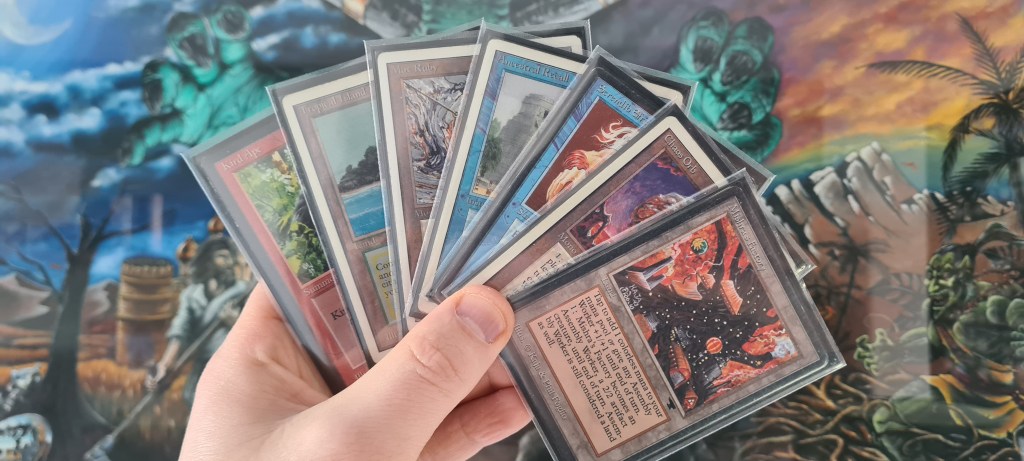
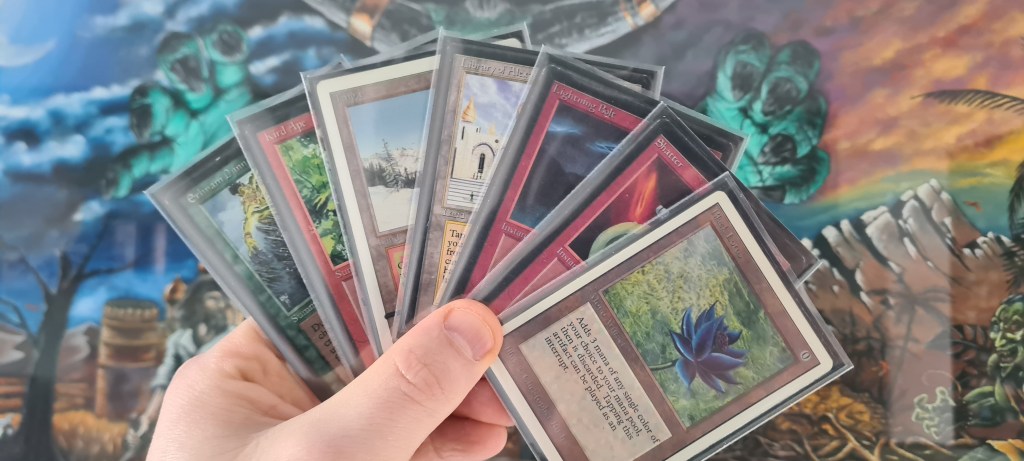
Opening hand Walter #1
Cards: Kird Ape • Tropical Island • Mox Ruby • Ancestral Recall • Serendib Efreet • Chaos Orb • Mishra’s Factory
Keep? Snap keep. This is a loaded Walter hand: power, gas, pressure, and an “emergency button.”
T1: Tropical Island + Mox Ruby → Kird Ape
Walter starts the scene with the gun on the table. In the opponent’s upkeep play Ancestral Recall. You’re digging for a second colored land (Taiga/Volcanic/City), plus more burn or another threat.
T2: play whatever land you hit → Kird Ape starts swinging. Cast Serendib and pass the turn.
T3+: keep the pressure up with Ape & Serendib followed up by playing a Factory. Don’t play the Orb until you run into a serious problem.
Opening hand Walter #2
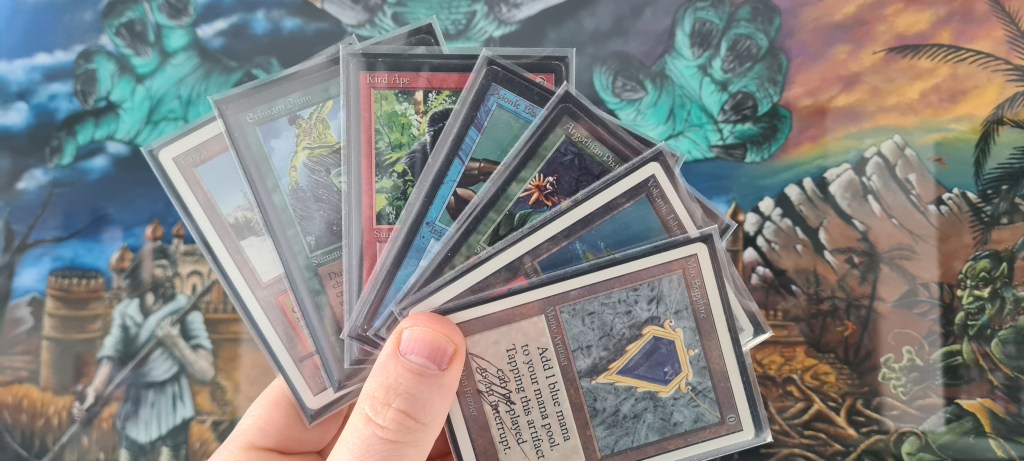
Cards: Black Lotus • Library of Alexandria • Island • Erhnam Djinn • Kird Ape • Lightning Bolt • Shatter
Keep? Yes — but this one comes with a real fork in the road.
The decision: Do you take the long game with Library… or do you slam turn-1 Djinn and dare them to have it?
Line A — The “be responsible” Library line (the one you should take)
T1: Library of Alexandria, pass.
T2: draw → you’re back to 7 → tap Library for the extra card, then decide what you’re doing.
The goal here is simple: use Library to find a real red/green mana source so Bolt/Shatter/Ape actually function, and keep Lotus as your “break glass in case of emergency” card.
Why this line is good: if they answer a rushed Djinn (Swords/Terror), you don’t get stranded with a hand full of spells you can’t cast.
Line B — The Walter line (the one you’ll actually take)
T1: Black Lotus → Erhnam Djinn.
Pick your land for turn based on the matchup/plan.
Why this line is risky: if they have the clean answer, you’re suddenly holding a mediocre hand.
Why you still do it anyway: if they don’t have the answer… it’s a very short movie. So yeah: “Fuck it, turn-1 Djinn.” Walter doesn’t think — he acts.
Opening hand Walter #3
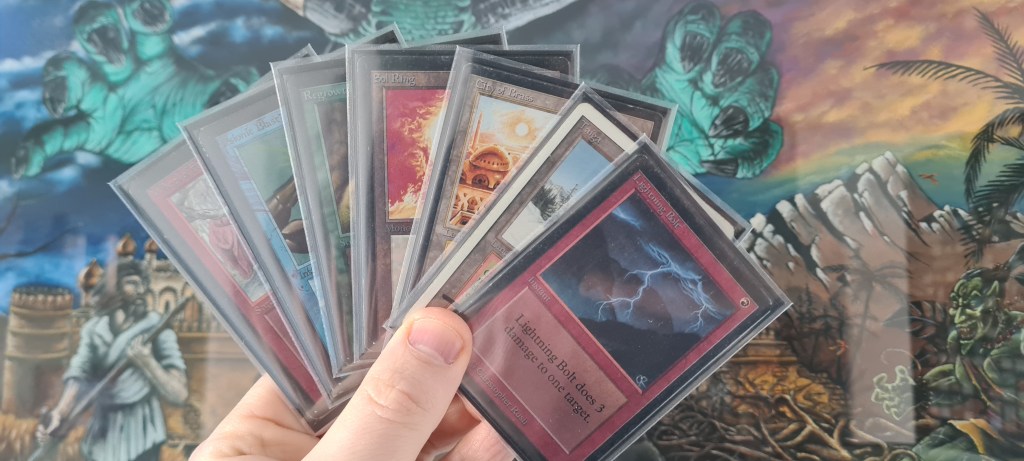
Cards: Mox Sapphire • Volcanic Island • Taiga • Kird Ape • Argothian Pixies • Psionic Blast • Erhnam Djinn
Keep? Easy keep. This is the dream: solid mana, early pressure, reach, and a clean top-end threat.
Game plan:
T1: Taiga + Mox → Kird Ape (start the clock).
T2: Volcanic → Pixies (or hold up Psionic Blast if you need to answer something).
T3+: drop Erhnam Djinn and let burn finish the job.
Walter loves this hand because it doesn’t ask questions—it just starts punching.
Opening hand Walter #4
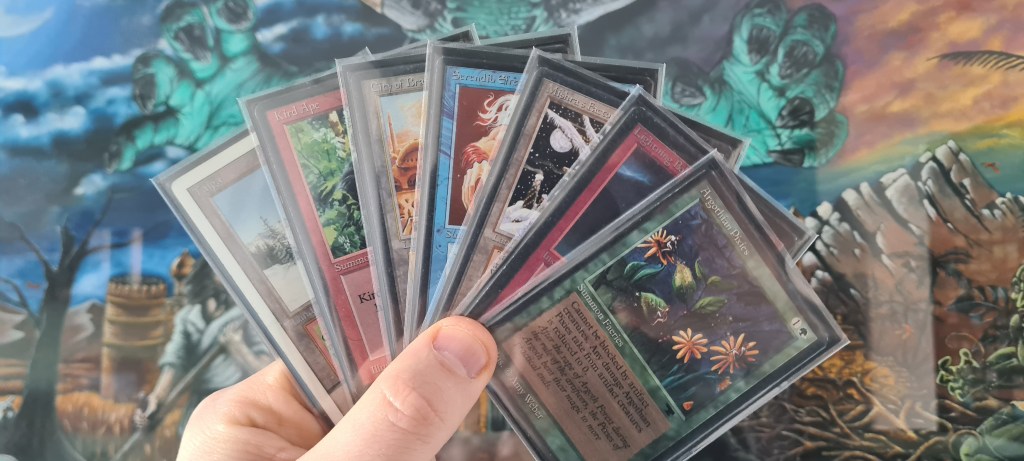
Cards: Taiga • City of Brass • Sol Ring • Wheel of Fortune • Regrowth • Psionic Blast • Lightning Bolt
Keep? Probably keep — but it’s not a pretty one. No creature, so you’re basically betting on Ring + Wheel to find the action.
Game plan :
T1: land → Sol Ring.
T2: second land → Wheel of Fortune (and if they don’t respond with something annoying, sure… Bolt to the face).
After the Wheel: you’re digging for any threat (Ape/Efreet/Djinn/Factory) and then you just start converting the new hand into damage.
Why it’s risky: if Wheel gets countered (or you whiff hard), you’re kind of just holding burn and vibes. Why Walter keeps anyway: because “not a super hand” is still a hand that can turn into a very short game once the Wheel spins.
Opening hand Walter #5
Cards: Taiga • City of Brass • Kird Ape • Argothian Pixies • Serendib Efreet • Lightning Bolt • Mishra’s Factory
Keep? Easy keep. This hand does exactly what Walter wants: pressure immediately, back it up with burn, and keep the clock running.
Game plan:
T1: land → Kird Ape.
T2: second land → Pixies (or hold Bolt if you need to clear the way).
T3+: Serendib Efreet comes down and the game turns into a race you’re happy to run. Factory is your “no creatures? no problem” backup plan and keeps damage flowing through removal.
Simple, clean, violent — perfect Walter.
Deck 2: The Dude RUG Tempo
“The Dude abides.”
If Walter is the guy who turns every situation into a confrontation, The Dude is the guy who refuses to let the situation happen in the first place. Same RUG shell, same early pressure… but the mindset is completely different.
Walter converts cards into damage.
The Dude converts turns into damage.
The Tempo version wins by sticking an early threat and then making your opponent waste time trying to claw back into the game. Every counterspell is a stolen turn. Every burn spell removes an obstacle “nice blocker you had there, man.” And Sylvan Library makes sure you’re always drawing the exact kind of card you need to keep the movie going.
The Dude Build
- 4 Kird Ape
- 3 Argothian Pixies
- 3 Serendib Efreet
- 3 Erhnam Djinn
- 1 Ancestral Recall
- 4 Lightning Bolt
- 3 Counterspell
- 1 Mana Drain
- 2 Shatter
- 2 Psionic Blast
- 1 Power Sink
- 1 Time Walk
- 1 Regrowth
- 2 Chain Lightning
- 1 Black Lotus
- 1 Mox Emerald
- 1 Mox Ruby
- 1 Mox Sapphire
- 1 Sol Ring
- 1 Chaos Orb
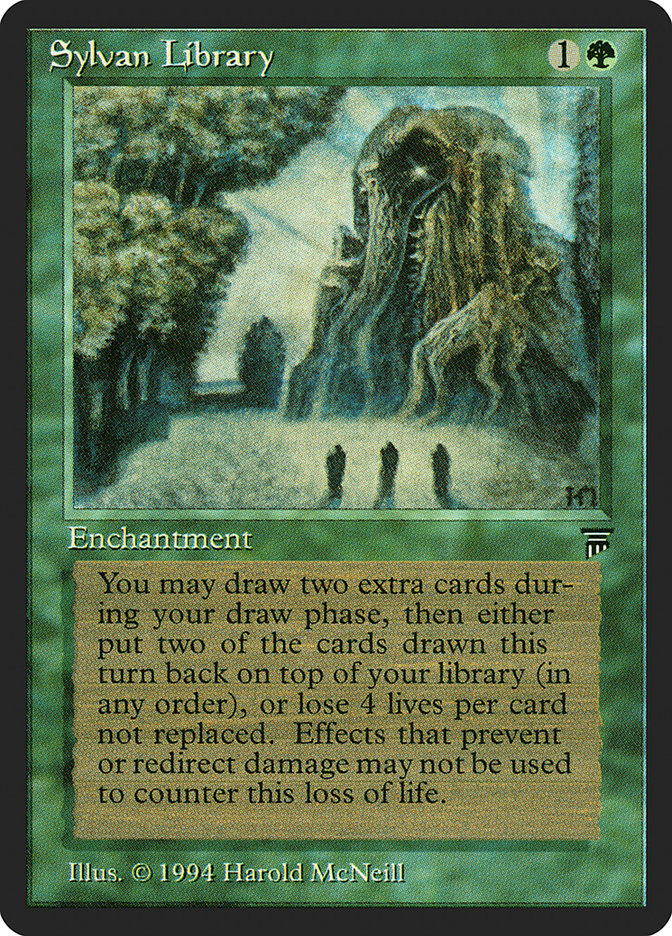
- 3 Sylvan Library
- 1 Library of Alex.
- 4 Mishra’s Factory
- 2 City of Brass
- 1 Strip Mine
- 4 Taiga
- 4 Tropical Island
- 4 Volcanic Island
Sideboard
- 2 Whirling Dervish
- 2 Blue Elemental Blast
- 2 Red Elemental Blast
- 1 Shatter
- 1 Earthquake
- 1 Falling Star
- 1 Tranquility
- 3 Energy Flux
- 2 Control Magic
The Dude’s game plan
Tempo isn’t trying to empty its hand and reload with Draw 7 spells.
In fact, that’s the whole point:
Walter resets the room (Wheel / Twister)
The Dude controls the room (Library + counters)
This deck wants to get slightly ahead and then stay ahead: one threat on board, a couple of lands, and mana up to say “Nope, this aggression will not stand, man” at the exact moment your opponent tries to stabilize.
Why these creatures?
The creature suite is still the classic RUG backbone:
Kird Ape and Argothian Pixies: fast starts that punish stumbles.
Serendib Efreet: the clock that ends games while you hold up interaction.
Erhnam Djinn: your clean midgame hammer when the opponent starts spending turns answering your early stuff.
The key difference is how The Dude uses these creatures.
Walter plays threats like he’s starting a bar fight. The Dude plays threats like he’s putting a bill on the table and letting it accrue interest.

In Tempo, it’s often correct to stick one or two creatures and then spend the next few turns protecting them—because if your one threat keeps connecting, the opponent never gets the breathing room they need.
Burn: still there, but it’s not the personality
The Dude still plays burn, but it functions more like a toolkit than a lifestyle:
- 4 Lightning Bolt
- 2 Chain Lightning
- 2 Psionic Blast
For Walter, burn is reach first and removal second.
For The Dude, burn is removal first and reach second.
Bolts clear blockers so your threat keeps connecting. They pick off the creature that matters. They punish a greedy opener. And yes—sometimes they still go in the face, but only after you’ve already won the tempo war and the opponent is stumbling around in the dark.
The stack package: “Yeah, well, that’s just like… your opinion, man.”
Here’s the real personality swap:
- 3 Counterspell
- 1 Power Sink
- plus Mana Drain at the top
This is the difference between fighting and refusing to fight.
Tempo doesn’t want to answer everything. It wants to answer the one spell that matters—the stabilizer, the sweeper, the “I’m back in this game” play. You let them cast their harmless stuff. You counter the thing that changes the texture of the game.
And Power Sink deserves special mention because it’s so Dude-coded: it doesn’t just stop the spell, it often steals their whole turn. No drama. No shouting. They simply don’t get to do what they wanted to do.
Why 3 Sylvan Library (and no Twister/Wheel)?
This is the most important philosophical choice in the list.
Tempo wants to build small edges over multiple turns. When you’ve got a threat in play and control of the pace, the last thing you want is to spin the wheel and hand your opponent a fresh seven.
Sylvan Library does the opposite: it lets you keep the advantage you’ve built and sharpen it every single draw step. It finds lands when you need lands, threats when you need threats, and interaction when you need to protect the lead.
Walter reloads.
The Dude just quietly keeps drawing better than you.
Why 2 Shatter main?
You still need artifact answers, but Tempo doesn’t want to over-index on them because it has more ways to manage the game:
- you can counter the payoff,
- race with a protected threat,
- or pivot hard post-board.
So 2 Shatter is “enough” to keep you from folding to random artifacts, without diluting the plan: stick a threat, deny the key turns, win.
Sideboard: The Dude gets weird (on purpose)
Walter boards to hit harder. The Dude boards to make your opponent feel like their deck stopped functioning.
- 3 Energy Flux: the “nothing you own works anymore” card against artifact-heavy strategies.
- 2 Red Elemental Blast / 2 Blue Elemental Blast: efficient stack fights—protect your plan, disrupt theirs.
- 2 Control Magic: steal their big idiot and end the game with it.
- 2 Whirling Dervish: Perfect The Abyss.
- 1 Tranquility: a clean reset when enchantments are the problem.
- +1 Shatter / 1 Earthquake / 1 Fallen Star: flexible tools for specific tables and specific headaches.
This board is very “Dude”: it’s not trying to win loudly. It’s trying to win by making the opponent’s best plan feel embarrassing.
How Tempo actually plays
If Walter is about tapping out, Tempo is about representing options.
- You often play a threat on turn one or two… and then spend the next turns passing with mana up.
- You punish the opponent’s “finally, I can stabilize” turn with Counterspell, Power Sink, Strip Mine, or a timely burn spell.
- You win games where it feels like you didn’t do much—because your opponent never got a clean turn.
The Dude doesn’t end the game with a punchline.
He just keeps the game slightly out of reach until it’s over.
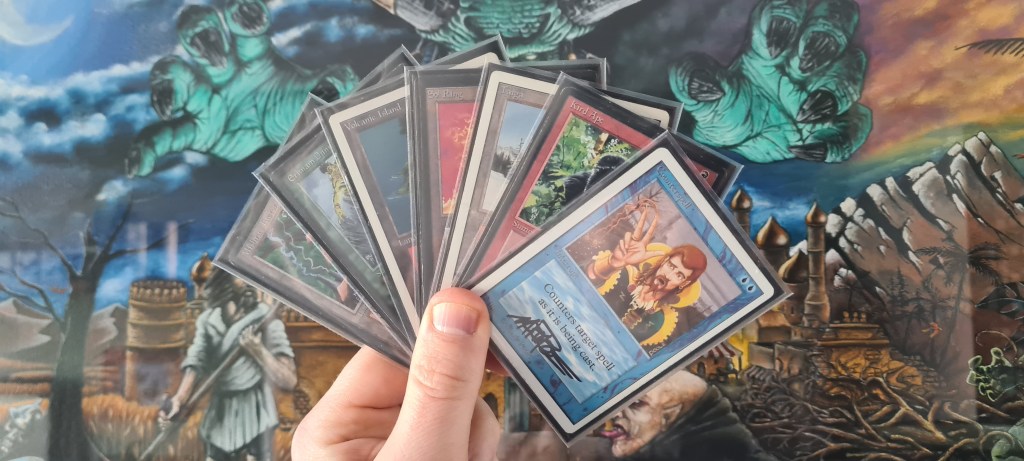
Opening hand The Dude #1
Cards: Mishra’s Factory • Erhnam Djinn • Volcanic Island • Sol Ring • Taiga • Kird Ape • Counterspell
Keep? Yes. This is tempo in disguise: pressure + acceleration, with counters waiting to come online.
Game plan:
T1: Usually Volcanic → Sol Ring. No drama. You’re setting up the room.
T2: Taiga → Erhnam Djinn (Ring does the heavy lifting).
T3+: Now you start looking for a second blue source so Counterspell becomes real cards, not decorations. Once you’re online, you can sit back like: “Calmer than you are.”
(If you’re against something super fast, you can also just lead Taiga → Kird Ape and accept that Ring can wait. The Dude doesn’t mind being a turn “late” if it keeps him alive.)
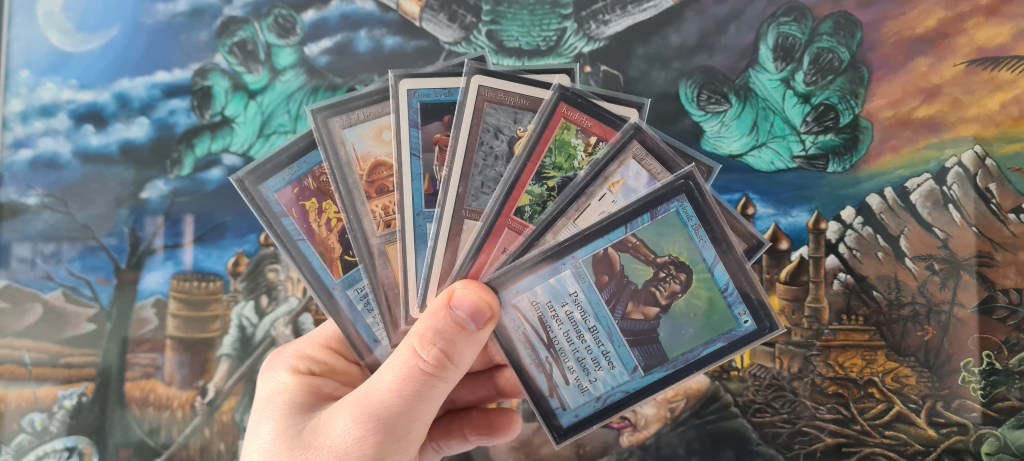
Opening hand The Dude #2
Cards: Power Sink • City of Brass • Time Walk • Mox Sapphire • Kird Ape • Library of Alexandria • Psionic Blast
Keep? Snap keep. This is pure Dude: card advantage + soft permission + time tricks.
Game plan:
T1: Library of Alexandria, pass (optionally drop Mox Sapphire if you need to represent interaction immediately).
Your whole goal is to start drawing extra cards and force the opponent to be the one who “does something.”
Power Sink is your “that’s just like, your opinion, man” card — it doesn’t have to be perfect, it just has to waste their turn.
Time Walk is best after you land a threat or stabilize a key turn. Don’t blow it early unless it’s turning a tempo screw (like “attack + extra land drop + still hold up interaction”).
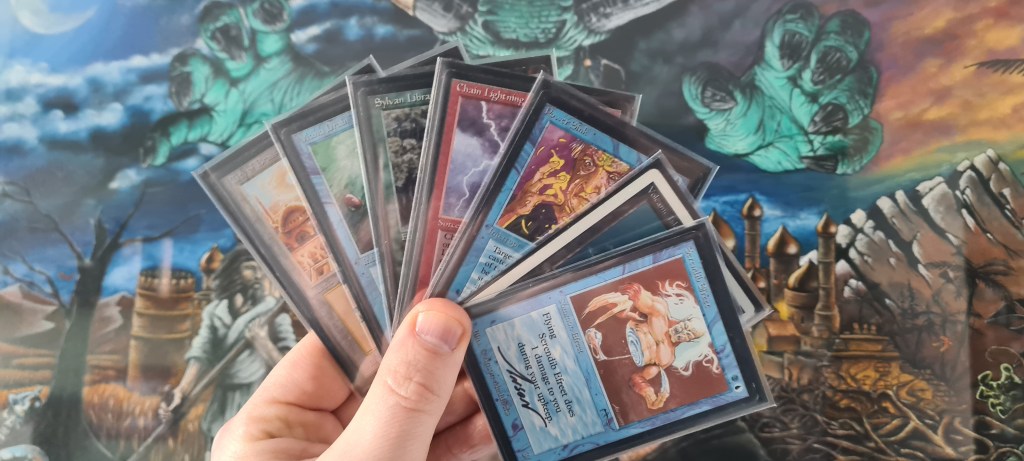
Opening hand The Dude #3
Cards: City of Brass • Mana Drain • Sylvan Library • Chain Lightning • Power Sink • Volcanic Island • Serendib Efreet
Keep? Yes. This is the Tempo handshake: threat + engine + “please stop casting spells.”
Game plan:
T1: Volcanic Island, pass. You’re representing Power Sink and you’re happy to play “react first.”
T2: City of Brass.
If they’re about to slam something important: hold up Mana Drain (UU is online now). If the coast is clear: start setting up Sylvan Library soon and let it bury them.
Efreet comes down when you can either protect it or when it immediately starts racing.
Chain Lightning is for clearing the lane or finishing — not for random turn-1 face shots. The Dude doesn’t start fights; he ends them.
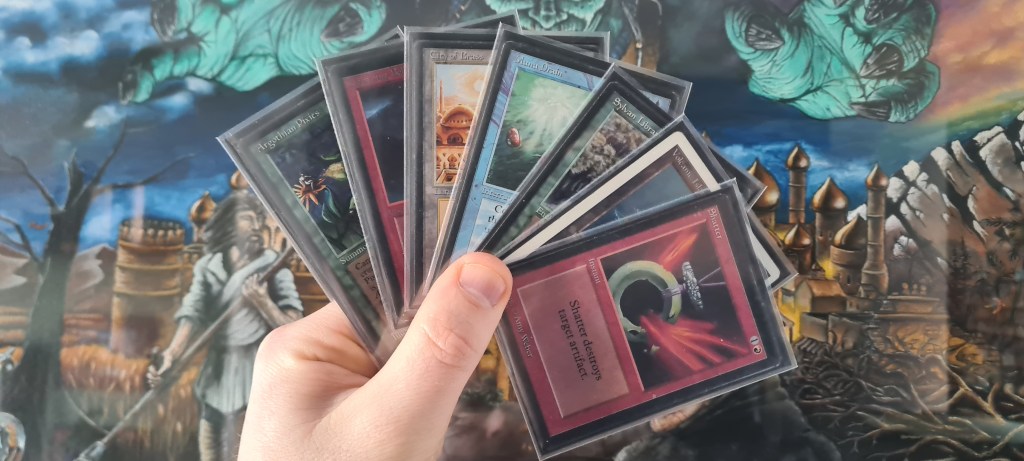
Opening hand The Dude #4
Cards: Argothian Pixies • Lightning Bolt • City of Brass • Mana Drain • Sylvan Library • Volcanic Island • Shatter
Keep? Yes. This is a very “play a normal game and win it” keep.
Game plan:
T1: Volcanic Island, chill. Bolt is ready if they try something cute.
T2: City of Brass and now you can sit on Mana Drain like it’s a bathrobe belt.
Pixies are sneaky here: they pressure through a bunch of the annoying artifact nonsense while you keep mana up. Shatter is tempo removal: you’re not “answering,” you’re stealing turns.
This hand screams: “This aggression will not stand, man.” (…but politely, with permission up.)
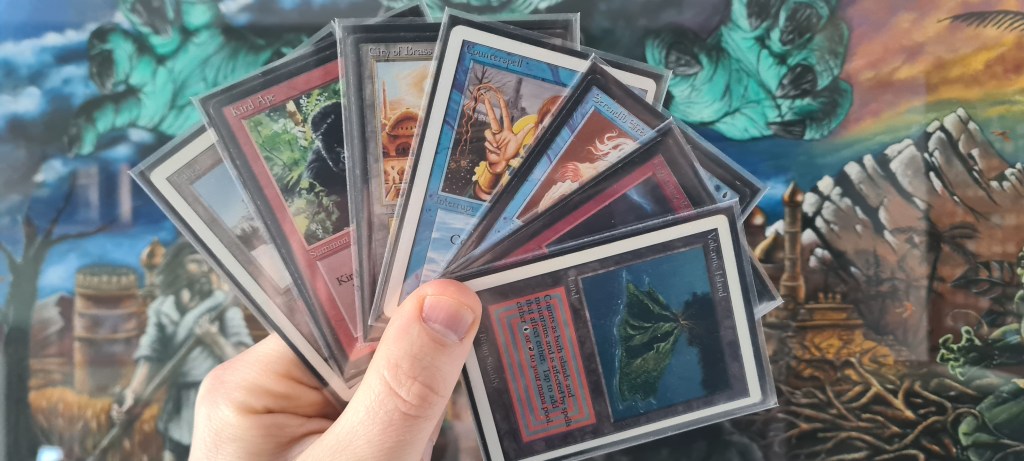
Opening hand The Dude #5
Cards: Taiga • Kird Ape • City of Brass • Counterspell • Serendib Efreet • Lightning Bolt • Volcanic Island
Keep? Easy keep. This is the cleanest “clock + permission” opener you can ask for.
Game plan:
T1 (best Dude line): City of Brass → Kird Ape. Yes, you take 1. That’s fine. The rug is tough.
T2: Volcanic Island and now Counterspell is live while Ape starts swinging.
Efreet is your next pressure spike — ideally you land it on a turn where you can still interact or where they’re tapped low. Bolt is for removing blockers / protecting your clock first. Face later.
This hand wins by doing almost nothing flashy: play a threat, say “no” at the right time, and let the opponent trip over your furniture.
Which one are you?
At some point you stop choosing a list and you start choosing a personality. If you pick up Walter RUG, you probably:
- tap out happily and ask questions later
- treat life totals like a resource you’re actively spending
- love “reload” buttons and hate long conversations
- would rather point removal at a permanent than argue on the stack
- win games by turning every draw step into immediate pressure
If you pick up The Dude RUG Tempo, you probably:
- keep mana up and let the opponent be the one to blink first
- care more about turns than cards
- counter the one spell that matters and ignore the rest
- play one threat and protect it like it’s the only thing in the room
- win games by making your opponent feel like they never got a clean turn
Either way… it’s still RUG. Same rug, different room. And whichever one you are: the Dude abides.
Jesus….
Oh—and one more thing, just as a silly afterthought before we roll the credits:
If Walter is Aggro and The Dude is Tempo… then Jesus Quintana is that third RUG personality nobody admits they are until they’re already doing it.
Jesus is Showboat RUG. Not pure speed, not pure restraint—just maximum style. The player who waits… poses… then wins the game off one disgusting sequence and somehow makes it look like you were never in the match to begin with.
He’s the Chaos Orb flip that ends a board state you worked three turns for.
He’s the Mana Drain that turns into an Erhnam plus “hold up Counterspell.”
He’s the Time Walk that isn’t a value play—it’s a strut.
Not the fastest. Not the calmest. Just the one who shows up, bowls a perfect frame, and leaves you staring at your hand like:
…nobody fucks with the Jesus.

 The Edge-Man
Leave a comment