Start Here
YOUR FIRST STEPS INTO OLD SCHOOL MAGIC
Welcome to Old School
The cards may be old, rare and legendary. The community is far more welcoming than the outside world sometimes suggests.
From the outside, Old School Magic can resemble a secret society built around expensive cards, obscure rules and arguments about whether a particular printing feels authentic enough.
That appearance misses the heart of the format. Old School is about atmosphere, nostalgia, memorable cards and playing a raw early form of Magic: The Gathering.
More importantly, it is about the people who preserve and celebrate this strange corner of the game.
This guide will help you understand the card pool, the main rules differences, reprint policies, beginner decks and what to expect when you attend your first event.
It Is Not About Owning Everything
You do not need a perfect collection before you begin. Start with cards you can access, build something you enjoy and allow the format to grow with you.
What Is 93/94?
Old School Magic uses cards from the game’s earliest core sets and expansions.
Old School Magic, usually called 93/94, returns to the first era of the game. The original Swedish format was built around the releases from Magic’s first full year.
These sets contain many of the most celebrated cards ever printed, but they also contain weak creatures, forgotten spells, strange mechanics and beautiful design experiments.
That mixture is essential. Old School is not simply a contest between famous cards. It is a place where unusual brews and unlikely threats can still create unforgettable games.
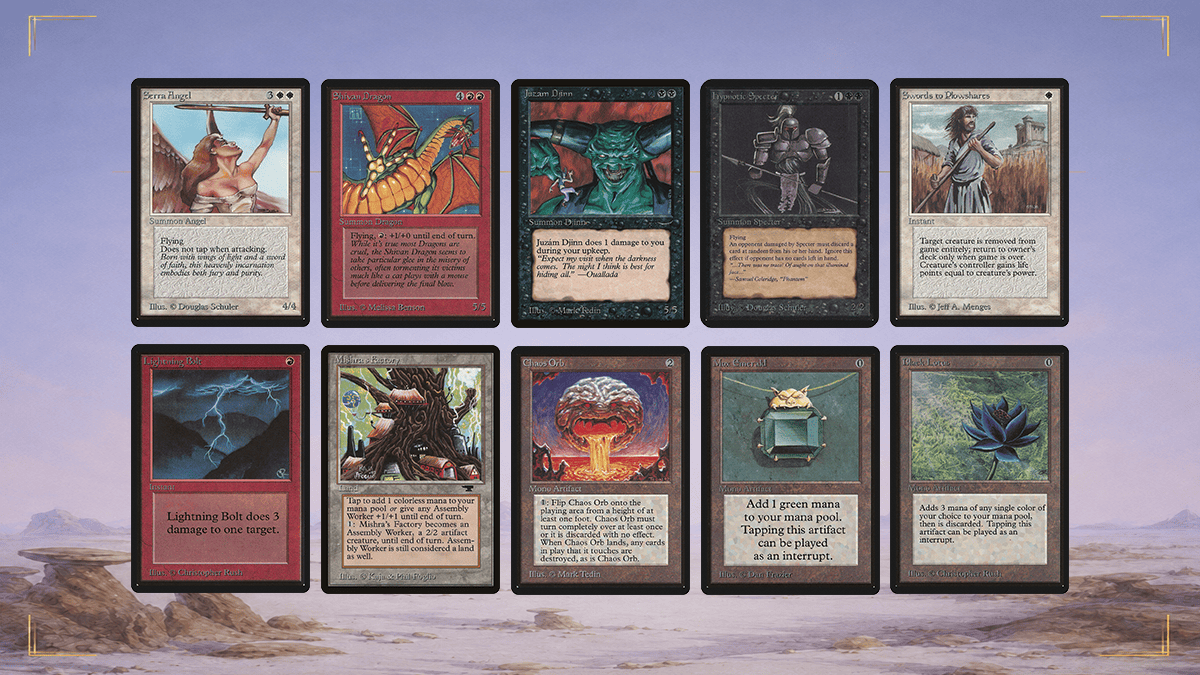
Expect powerful staples, terrible creatures, eccentric combinations and decks that make little sense until they somehow defeat you.
Rules and Variants
There is no single worldwide Old School ruleset. Different communities preserve the format in slightly different ways.
Modern Game Rules
Nearly every Old School variant uses the full modern Magic rules engine rather than trying to recreate every historical rules system.
Mana Burn
Some variants retain mana burn. Unused mana can therefore cost life when the mana pool empties at the end of a step or phase.
Local Card Pools
Some communities add sets such as Fallen Empires or use a different Banned and Restricted List.
Event-Specific Details
Reprints, Chaos Orb procedures and other details can vary even between tournaments in the same region.

Read the Event Rules
A tournament organizer will normally publish the relevant card pool, reprint policy, mana burn decision and any special card rulings. Ask when something is unclear—the community is usually happy to help.
Reprints and Printings
Reprint policies balance accessibility with the visual and historical character of the format.
Old-Frame Reprints
Many groups permit later printings that retain the original card name and traditional frame.
Foreign, CE and IE
Foreign-language cards, Collector’s Edition and International Edition are accepted in many communities but not in all of them.
Alternative Products
Foils, modern frames, gold-bordered cards and later commemorative editions are treated differently from event to event.
Many Policies Are Designed to Welcome You
A large part of the Old School community wants new players to participate. More flexible reprint policies can lower the barrier to entry while preserving the old-frame atmosphere.
Choose Your First Deck
Your best first deck is not necessarily the strongest one. It is the deck that makes you want to play another game.
Old School supports aggressive creature decks, controlling blue strategies, burn, prison, midrange, artifacts, combo and unusual brews. Testing several archetypes is the easiest way to discover what suits you.
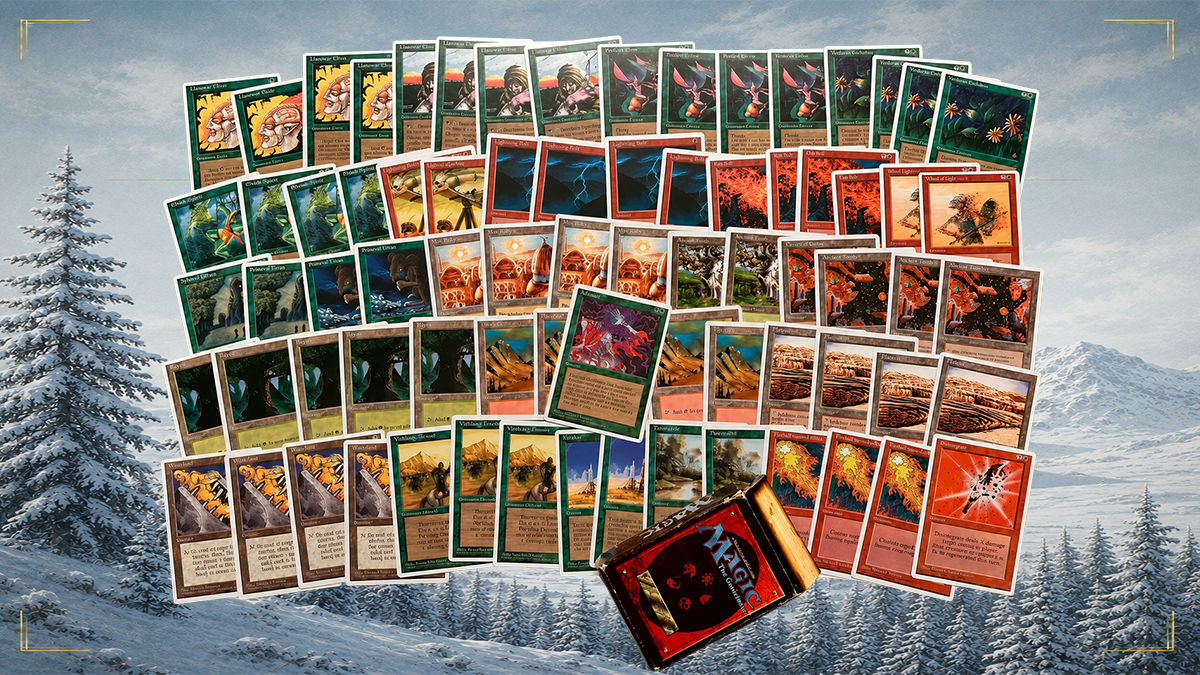
Begin with affordable cards where your local rules allow them. Revised and Fourth Edition copies are practical starting points. Mono-coloured decks are especially accessible because they can function without expensive dual lands.
Play games, make mistakes and change cards. Once you discover a deck you love, you can gradually upgrade it toward the printing standard you prefer.
White Weenie
Small creatures backed by Crusade, Swords to Plowshares and Disenchant. Some versions also use Armageddon to close the door.
Mono Black
Dark Ritual, Hypnotic Specter, Terror, Drain Life, Underworld Dreams and other wonderfully unpleasant black cards.
Red Aggro
Lightning Bolt, Chain Lightning, Ball Lightning, Goblins, Atog, Blood Moon and direct damage provide a direct game plan with more depth than it first appears.
Green Stompy
Elves, Pixies, Erhnam Djinn, Giant Growth and other efficient creatures reward players who enjoy attacking and mastering combat.
Erhnam Burn’em
Large green threats combine with red removal. Erhnam Djinn attacks, Lightning Bolt clears the way and Fireball ends games.
Blue-Red Counterburn
Serendib Efreet and Flying Men apply pressure while Counterspell, Lightning Bolt and Psionic Blast control the pace of the game.
Do I Need Power?
You Do Not Need Power Nine Cards to Begin
Moxen and Black Lotus are powerful, famous and central to the mythology of the format. They are not an entry requirement.
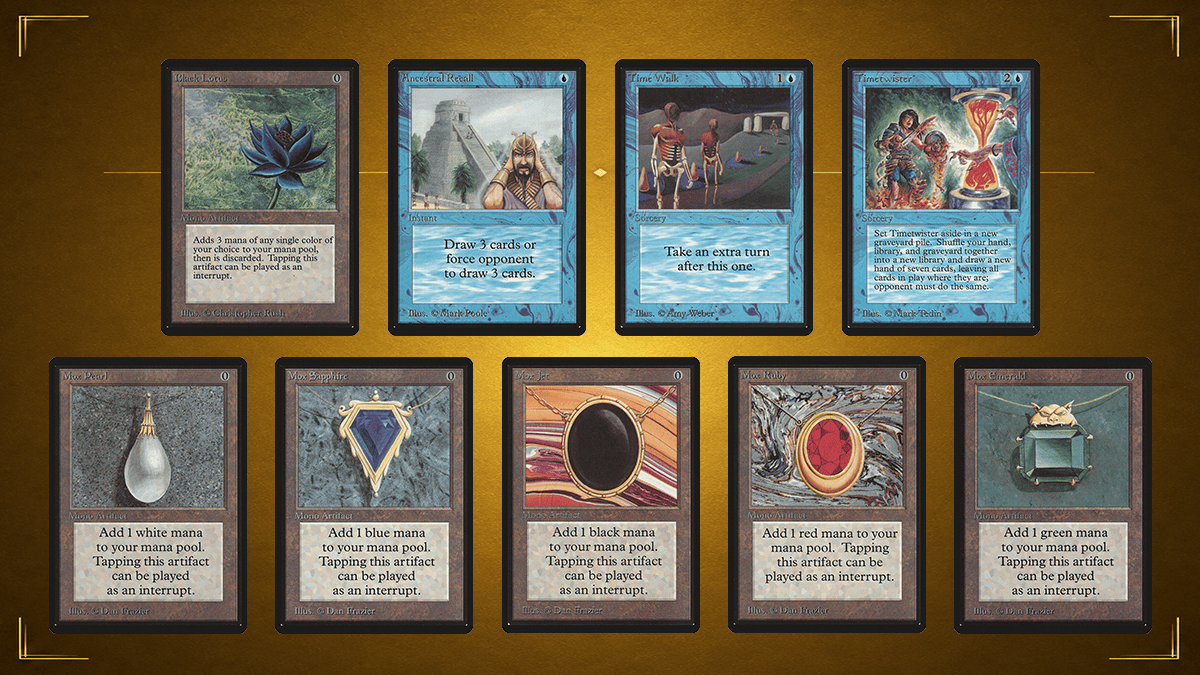
Old School has always had room for underdogs, budget decks, personal favourites and unusual strategies. Many players care as much about the deck’s story and character as they do about its theoretical strength.
Borrowing cards is possible when needed, but there is also something rewarding about learning and developing a deck built from your own collection.
Cost and Collecting
Old School can be expensive, but expensive cards do not have to define your starting point.
Some cards are major collector pieces. Power Nine, Library of Alexandria, Bazaar of Baghdad, Mishra’s Workshop, Juzám Djinn and other icons can command serious prices.
That does not mean every playable or enjoyable deck must cost a fortune. Players enter the format in many different ways and often build their collection over a long period.
Start Without Power
Learn the games, interactions and local community before deciding whether expensive cards matter to your plans.
Use Allowed Reprints
Where the event permits them, accessible printings can let you play first and collect later.
Consider One Colour
Mono-coloured decks avoid the need for a costly dual-land mana base and are often easier to assemble.
Upgrade Slowly
Replace cards when it feels worthwhile. The long process of trading and improving can become part of the enjoyment.
Old School is not a race to own everything.
Start small. Play games. Learn the format.The Gathering
The games matter. The people, stories and shared experiences matter even more.
Old School is about the Gathering.
Players still compete, tune decks and challenge themselves against powerful strategies. Some enjoy technical decks because mastering them is difficult and rewarding.
Others prefer forgotten monsters, unlikely combinations and the chance to win one glorious game with a card nobody expected to see.
Most people exist somewhere between those two extremes.
Test Yourself
Tune the list, play tightly and measure your decisions against skilled opponents.
Create a Story
Cast strange cards, surprise the table and celebrate the game nobody will forget.

People attend tournaments to play Magic, but also to admire decks, trade cards, share drinks, laugh about terrible decisions and spend time with others who love the same peculiar era of the game.
Join the Gathering
Bring curiosity, respect for the format and a willingness to meet the community. The rest will follow one game at a time.
PLAY SOME GAMES.
BECOME PART OF OLD SCHOOL.
